Aging in place is mostly a list of small jobs
Expand section
Aging in place is mostly a list of small jobs
The modifications that let people stay in their homes longer are, for the most part, small installs done well. Grab bars anchored into framing. Handrails that do not wiggle. Lights where feet actually land. Handles that turn without a strong grip. Thresholds that do not catch a toe or a walker. None of that is a remodel. Almost all of it is a handyman visit, and the whole list often fits in a day or two.
That is worth saying plainly, because families often delay this work for years while thinking of it as a big renovation decision. The renovation projects exist, and we will flag them honestly below. But the highest-value safety work is small, fast, and inexpensive, and there is no good reason to wait on it.
Start in the bathroom: grab bars done right
Expand section
Start in the bathroom: grab bars done right
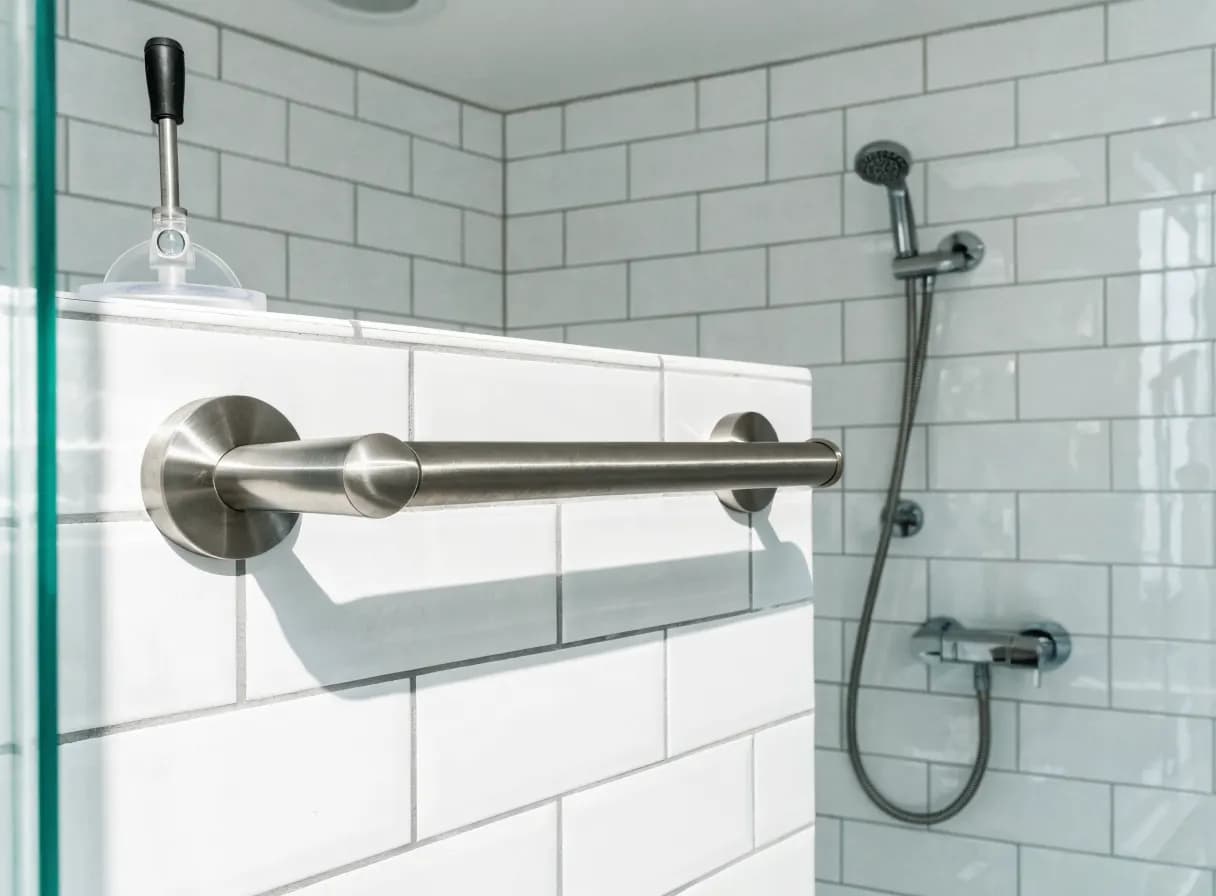
The bathroom is the highest-risk room in the house, and grab bars are the single best modification in it. The standard set is a bar beside the toilet, a bar at the tub or shower entry where the step-over happens, and a horizontal bar along the shower wall. Placement should fit the actual user: their height, their stronger side, how they move today and how they are likely to move in a few years.
The install is where quality matters. A grab bar has to fasten into studs or solid blocking, or use engineered anchors rated for the load when the wall is tile over backer or a fiberglass surround. A bar screwed into drywall anchors will hold a towel and fail a person. This is exactly the kind of small job where hiring it out earns its money: we find framing, use rated hardware, and load-test the bar before we call it done. It falls under our mounting and install work, and doing several bars in one visit costs meaningfully less per bar than one-at-a-time trips.
While we are in there: a handheld shower on a slide bar, a non-slip surface in the tub, a raised toilet seat, and a nightlight circuit between bedroom and bathroom are all small additions that pull real weight.
Stairs and steps: railings you can actually trust
Expand section
Stairs and steps: railings you can actually trust
Every stair, inside and out, should have a railing that a full adult weight can land on suddenly. Many Treasure Valley homes have a single rail, a loose rail, or decorative iron that ends before the bottom step. The fixes are straightforward carpentry work: tightening or re-anchoring existing rails into studs, adding a second rail on the open side, extending rails past the top and bottom steps, and adding a grab post at short garage and porch steps, which cause a surprising share of falls precisely because nobody thinks of two steps as stairs.
Outside, check the path the person actually walks: garage steps, porch steps, the route from the car. Winter matters here in Boise. A rail you can hold with a gloved hand on an icy morning is not a luxury.
Lighting: the cheapest modification on the list
Expand section
Lighting: the cheapest modification on the list
Aging eyes need two to three times more light, and most falls at night happen in the dark stretch between bed and bathroom. The upgrade list is simple and almost entirely swaps and additions on existing circuits, which keeps it in minor electrical territory: brighter bulbs and better fixtures on stairs and in hallways, plug-in or hardwired-swap motion nightlights along the bedroom-to-bathroom route, a light at every entry door, and switches at both ends of stairs and halls where the wiring already allows it.
Rocker switches beat toggles for stiff hands, and illuminated switches beat both in the dark. New circuits and panel work are for a licensed electrician, but the honest news is that most lighting wins never get near that line.
Doors, handles, and thresholds
Expand section
Doors, handles, and thresholds
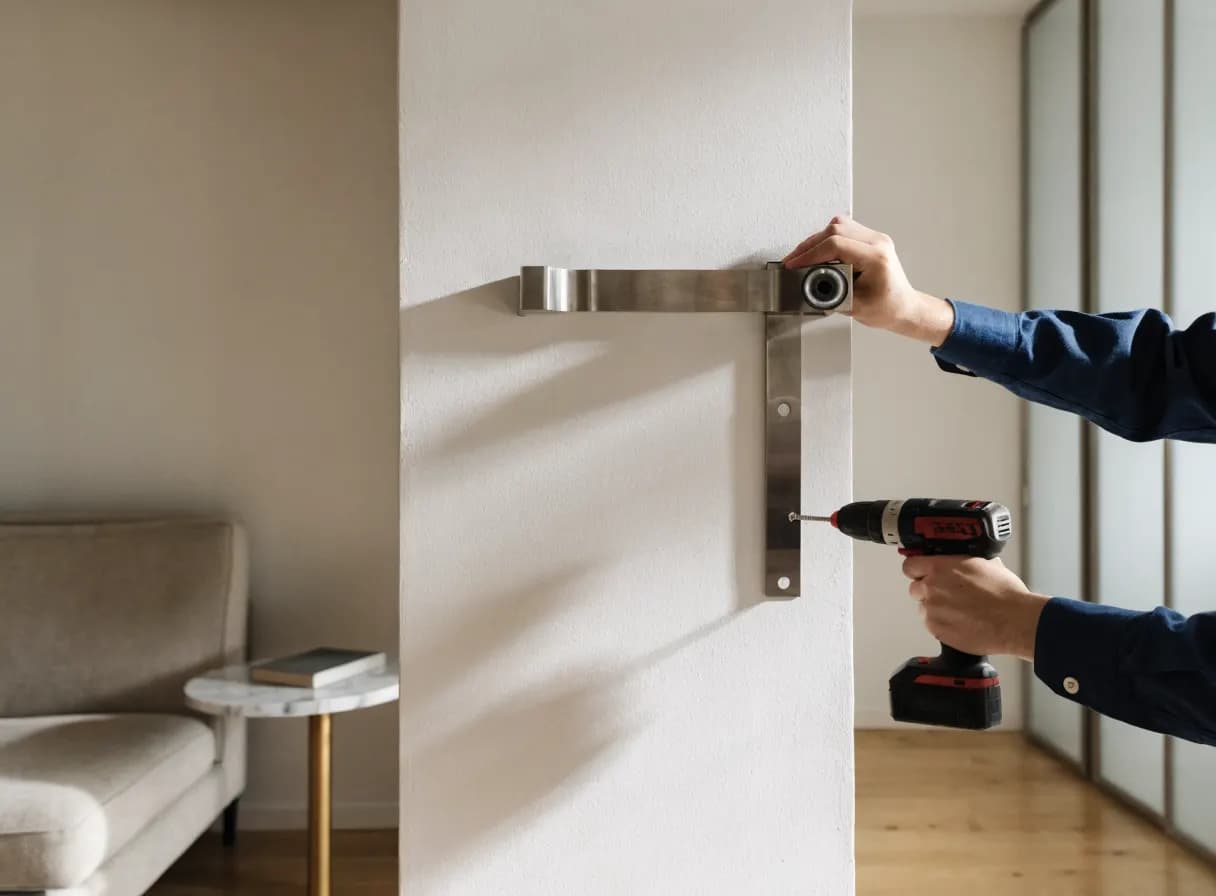
The rest of the list is about removing daily friction before it becomes daily risk. Lever handles replace round knobs everywhere a weak or arthritic grip struggles. Doors that stick or drag get planed and rehung so they never need a shoulder, which is a routine adjustment for us, covered in more detail in our post on sticking doors and squeaky floors. Thresholds get flattened or ramped with transition strips so walkers and shuffling feet do not catch. Loose carpet edges and curling vinyl get re-secured. Cabinet pulls replace knobs in the kitchen. None of these jobs takes more than an hour or two, and together they change how a house feels to live in.
What is honestly beyond a handyman
Expand section
What is honestly beyond a handyman
Some aging-in-place projects are remodels, and pretending otherwise serves nobody. Tub-to-walk-in-shower conversions, widened doorways, structural ramps, stair lifts, first-floor bathroom additions: those need a contractor, usually a permit, and sometimes an occupational therapist's input on layout. If your list includes them, we will say so in the first conversation and you can plan accordingly. What we bring is the layer underneath: the twenty small jobs that make the house safer this month, whether or not the bigger project ever happens.
How to start: one walkthrough, one list, one visit
Expand section
How to start: one walkthrough, one list, one visit
The efficient way to do this is a single walkthrough that produces a single list, done in one or two trips. Walk the house with the person who lives there, at their pace: entry, hallway, stairs, bathroom, bedroom, kitchen, garage. Note where they already steady themselves on furniture, door frames, or towel bars. That map of improvised handholds is the install plan.
Then batch the work. Trip charges and minimums make one-bar-at-a-time the expensive way to do this; a grouped visit gets the whole list done for less, and our post on what a handyman costs in Boise explains the math. We serve the whole Treasure Valley, and this is some of the most satisfying work we do. Get in touch and tell us about the house, or send the list you have already started making in your head.