Two symptoms, one cause: wood moves
Expand section
Two symptoms, one cause: wood moves
Squeaky floors and sticking doors are the same story told twice: wood responding to moisture, time, and gravity. The Treasure Valley makes it a seasonal rhythm, damp springs swell lumber, high-desert summers shrink it, and every cycle loosens fasteners a little and shifts tolerances a hair. Add the normal early settling of the valley's newer subdivisions and the decades of it in older Boise neighborhoods, and you get the two most common complaints on any repair list.
Neither is a structural alarm in the typical case, and both are satisfying, inexpensive fixes. Here is what is actually happening and what fixing it involves.
What a squeak actually is
Expand section
What a squeak actually is
Every squeak is movement: two pieces of wood, or wood and a nail, rubbing where they should be fixed. The usual suspect is subfloor lifting fractionally off a joist, so a footstep flexes it against the nail shaft, and the nail sings. Original construction relied on nails and adhesive; when the adhesive ages out or lumber shrinks, the connection goes loose, which is why squeaks multiply with a house's age and show up early in fast-built homes.
The durable fix is mechanical: screws where the movement is. A screw pulls the subfloor tight to the joist and stays tight, which is why the proper repair outlasts every squirt-something-in-the-gap shortcut. Locating the joist and the exact moving spot is most of the skill; the fastener takes a minute.
Fixing squeaks without wrecking the floor
Expand section
Fixing squeaks without wrecking the floor
Access decides the method, and most floors offer a clean path. Under carpet, breakaway screws drive through the pile into the joist and snap off below the surface, invisible when done. From an unfinished basement or crawl space, squeaks fix entirely from below: shims and adhesive at gapped joists, blocking between them, screws pulling subfloor down. Hardwood asks for more care, angled trim screws in seams, filled and matched, or top-down kits, and squeaky stair treads, the loudest offenders in the house, take screws and glue blocks from above or below.
All of it is standard carpentry repair. What we need from you is the map: walk the house and note where it talks, because a squeak that performs on demand is a squeak fixed in minutes.
Why doors stick: three causes in order
Expand section
Why doors stick: three causes in order
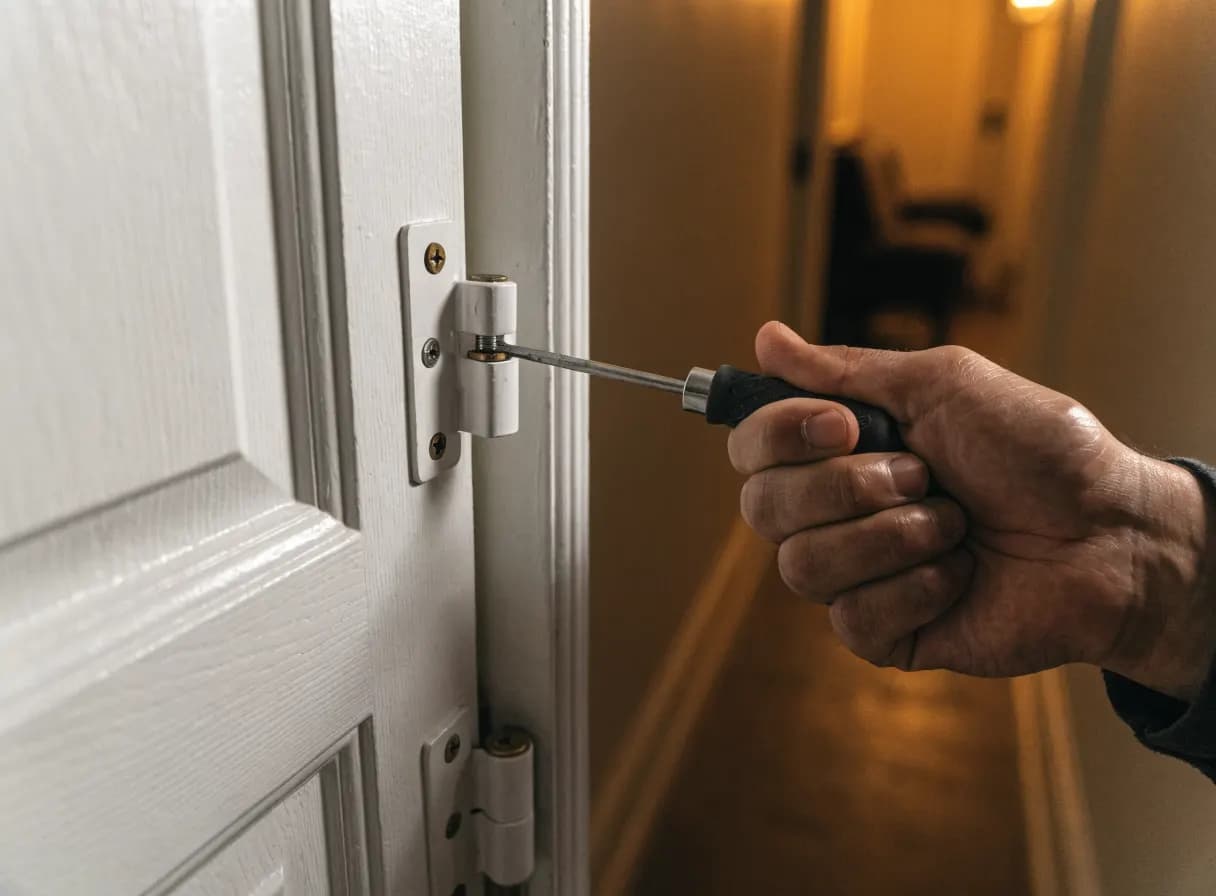
Check hinges, then humidity, then the house, in that order. Cause one, and the most common: hinge screws pull loose under years of door weight, the door sags a few millimeters, and the top corner rubs the jamb. The fix is tightening, or replacing a stripped screw with one long enough to bite the framing behind the jamb, restoring the door's hang entirely.
Cause two is seasonal swelling. A door that rubs in damp months and frees up in summer is breathing with the weather, and doors with unsealed top and bottom edges breathe fastest. The fix is fitting the door for its swollen state and sealing the bare edges to damp the cycle. Cause three is the frame itself moving as the house settles, racking the opening slightly out of square, so the latch stops meeting the strike plate. Strike plates adjust, hinges shim, and where geometry demands it, a careful plane of the binding edge, last, because planing is permanent.
When sticking doors mean something more
Expand section
When sticking doors mean something more
One sticky door is a door problem; a sudden pattern of them is worth a closer look. The combination that earns attention: multiple doors going out of alignment in the same season, fresh drywall cracks running diagonally from door and window corners, and floors that have developed a perceptible slope. That cluster can indicate settling beyond the normal, and evaluating it is a job for a structural engineer or foundation specialist rather than any handyman. Our part of that story is honesty: we fix the doors that are just doors, and we say plainly when the pattern suggests you should look deeper before spending on trim fixes.
What the fixes cost, and the batching rule
Expand section
What the fixes cost, and the batching rule
These are among the cheapest high-satisfaction repairs in the house. Treasure Valley market rates run roughly $75 to $200 per door adjustment and $100 to $300 per squeak depending on access, with the usual visit-minimum math meaning the second, third, and fourth fixes in a trip cost far less than the first. The playbook: collect every door that rubs, latch badly, or swings itself open (a two-minute hinge tweak), every squeak, and any loose rail or wobbly baluster, and book them as one list. Full pricing context is in our common repair cost guide, and if you are weighing the DIY route, our DIY vs handyman framework is frank about which of these fixes forgive amateurs and which do not.
Worth adding: silent floors and doors that swing freely are not just comfort. For anyone unsteady on their feet, a door that needs a shoulder is a fall risk, which is why door work shows up in our aging-in-place modification list too.
Make the list while the house is talking
Expand section
Make the list while the house is talking
Walk your house tonight and write down every squeak and every door that fights back. Send us the list, and we will quote the visit flat and clear it in a trip: screws where the floor moves, hinges and strikes tuned, edges planed only where geometry truly demands it, and a straight answer if anything suggests more than wear and weather. We fix floors and doors across Boise, Meridian, Eagle, Nampa, and the whole Treasure Valley. Book the repair.