The case for small upgrades
Most of what makes a house feel dated or frustrating is small, and it can be fixed small: worn paint, dim lighting, 1990s hardware, drafty doors, and nowhere to put anything. A renovation replaces rooms; the upgrades in this guide replace the details you touch and look at every day, for hundreds of dollars instead of tens of thousands, and mostly in single afternoons. That is the entire thesis: maximum change in daily life per dollar and per day of disruption.
This guide ranks the upgrades that consistently pay off in Treasure Valley homes, with realistic installed costs, the right order to do them in, and honest notes on which "small" ideas are secretly big ones that need licensed trades. Every price here is a planning range; a firm number takes a photo and a five-minute conversation.
Paint: the undisputed first move
Nothing changes a room per dollar like paint, and nothing else on this list hides so many past sins while it works. A professionally painted room in the Boise area runs $300 to $800 depending on size, ceiling height, and how much patching the walls need first, which is exactly why paint should come after repairs and before everything else. Fresh walls in a current neutral reset the whole room; the fixtures and hardware you add afterward land on a clean stage.
Where paint pays hardest: the kitchen and main living areas you occupy daily, the front door and entry that set the first impression, and any room still wearing a 2005 accent wall. Exterior touch-up matters differently here, our high-UV summers chalk and crack south-facing trim faster than the shaded sides, so touch-ups are protective maintenance, not just cosmetics. Both sides of the brush are covered by our painting service, which starts at $199.
Lighting and fans: the second-biggest lever
Swapping dated fixtures, adding dimmers, and getting bulb temperatures consistent changes how a whole house reads for $100 to $350 per fixture installed. The boob light in the hallway, the brass-and-frosted-glass bathroom bar, the dining fixture from the builder's cheapest page: each is an hour's swap where the wiring already exists. Dimmers, $75 to $150 each, buy more day-to-day comfort per dollar than almost anything in this guide. And matching bulb color across a room, warm white in living spaces is the usual answer, is free and weirdly transformative. Where a room has no overhead light at all, common in older living rooms, a switched outlet plus good lamps beats new wiring on cost every time, and confirming which outlet the wall switch controls is a two-minute job.
Ceiling fans deserve their own sentence in this climate: dry summer heat makes moving air genuinely effective, and reversing the fan in winter pushes furnace heat down from tall ceilings. A swap at an existing fixture runs $150 to $350 through our minor electrical service. The honest boundary: new fixture locations mean new wiring, and new wiring means a licensed electrician, not a handyman.
Weathersealing: the upgrade that pays rent
Weatherstripping, caulk, and door sweeps are the only items on this list that send you money every month. The Treasure Valley both heats and cools hard, so every gap around a door or penetration costs twice a year. The full sealing pass, exterior door weatherstripping, sweeps, caulking gaps at trim and penetrations, sealing the attic hatch, mostly prices under $300 and shows up on utility bills immediately, on drafty houses noticeably. It also quiets the house and keeps the fall box-elder bugs where they belong.
Window treatments belong in the same conversation, because in this climate they are equipment, not decor. Cellular shades on the west-facing glass of a Treasure Valley house earn their keep every July afternoon, and blackout options in bedrooms earn theirs at 5 a.m. in June, when this latitude's summer sun arrives before most alarms. Measuring and mounting a whole house's worth of blinds and shades is classic batch work, an afternoon with a level and the right anchors, and it is one of the most requested items on new-home install lists because builders almost never include coverings at all.
Sealing is bundled naturally into a maintenance visit, and it is the core of our caulking and home maintenance service. The season-by-season version of this thinking is in the complete Boise home maintenance guide.
Hardware: de-aging a house $12 at a time
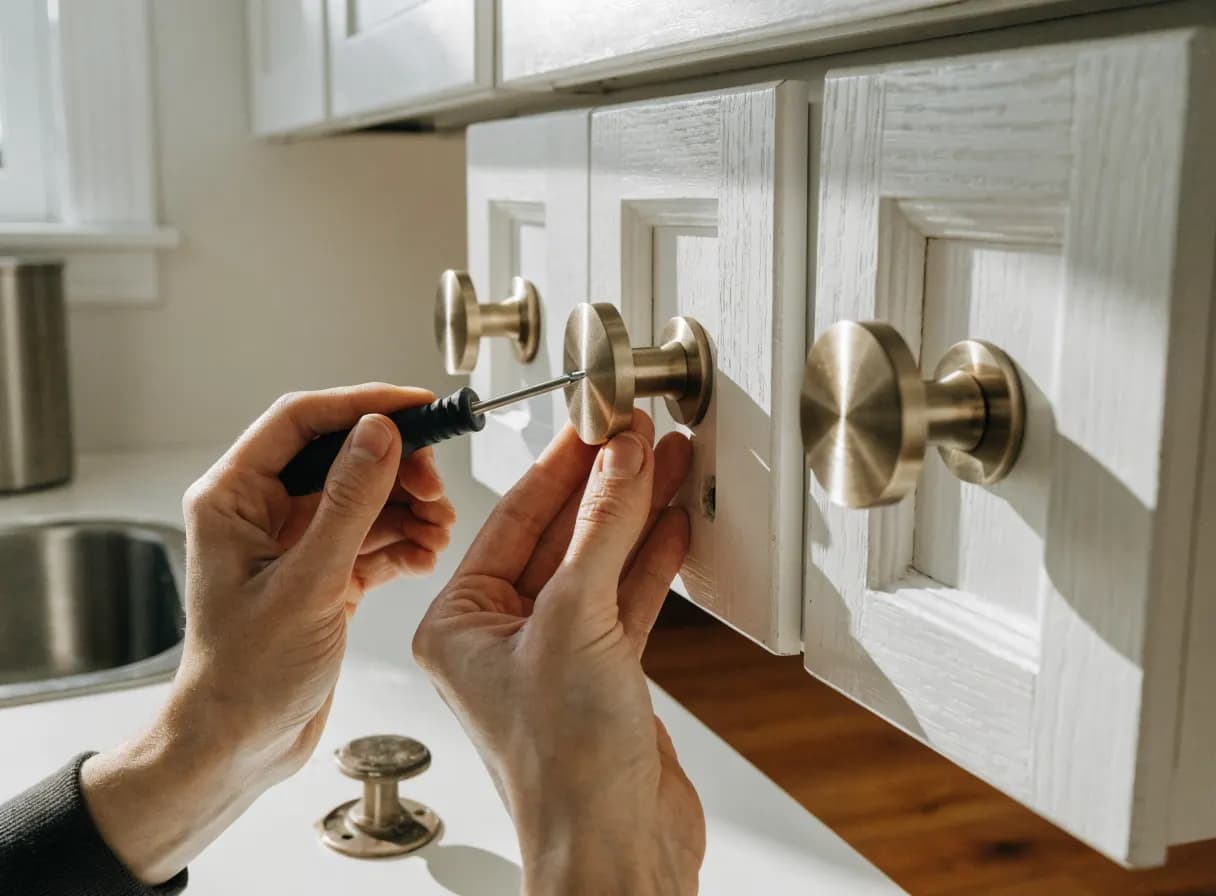
Door handles, cabinet pulls, hinges, and switch plates are what date a house most precisely, and they are the cheapest things on it to change. Swapping polished brass for current finishes across a kitchen's cabinets runs a few hundred dollars installed, including drilling for new pull spacing where needed; door hardware swaps run $75 to $200 a door depending on what is being replaced. This is fiddly, repetitive work with a real payoff, which makes it ideal batch work: one visit, every door and drawer in the house.
The adjacent upgrade is making what you have work properly again: cabinet doors that sag, drawers that stick, interior doors that no longer latch. Those adjustments live in our carpentry and trim service, and doing them alongside the hardware swap is the difference between a kitchen that looks updated and one that works updated.
Interior doors themselves are the sleeper upgrade in this category. Hollow-core slabs with thirty years of dings and paint drips date a hallway as loudly as any fixture, and the remedies scale with budget: at the low end, a careful sand-and-repaint with fresh hinges and handles makes the existing doors disappear into the background; at the mid range, replacing the worst slabs one at a time, fitted to the existing frames, avoids the cost of re-casing anything. Closet doors are the same story with a cheaper ending, because sliding and bifold hardware wears out long before the doors do, and a $30 track kit plus an hour of fitting returns a closet to smooth, quiet operation. None of it is glamorous, and all of it is the difference between a hallway you apologize for and one you never think about, which is the entire thesis of this guide applied to the most-touched objects in the house.
Mounting and storage: the function upgrades
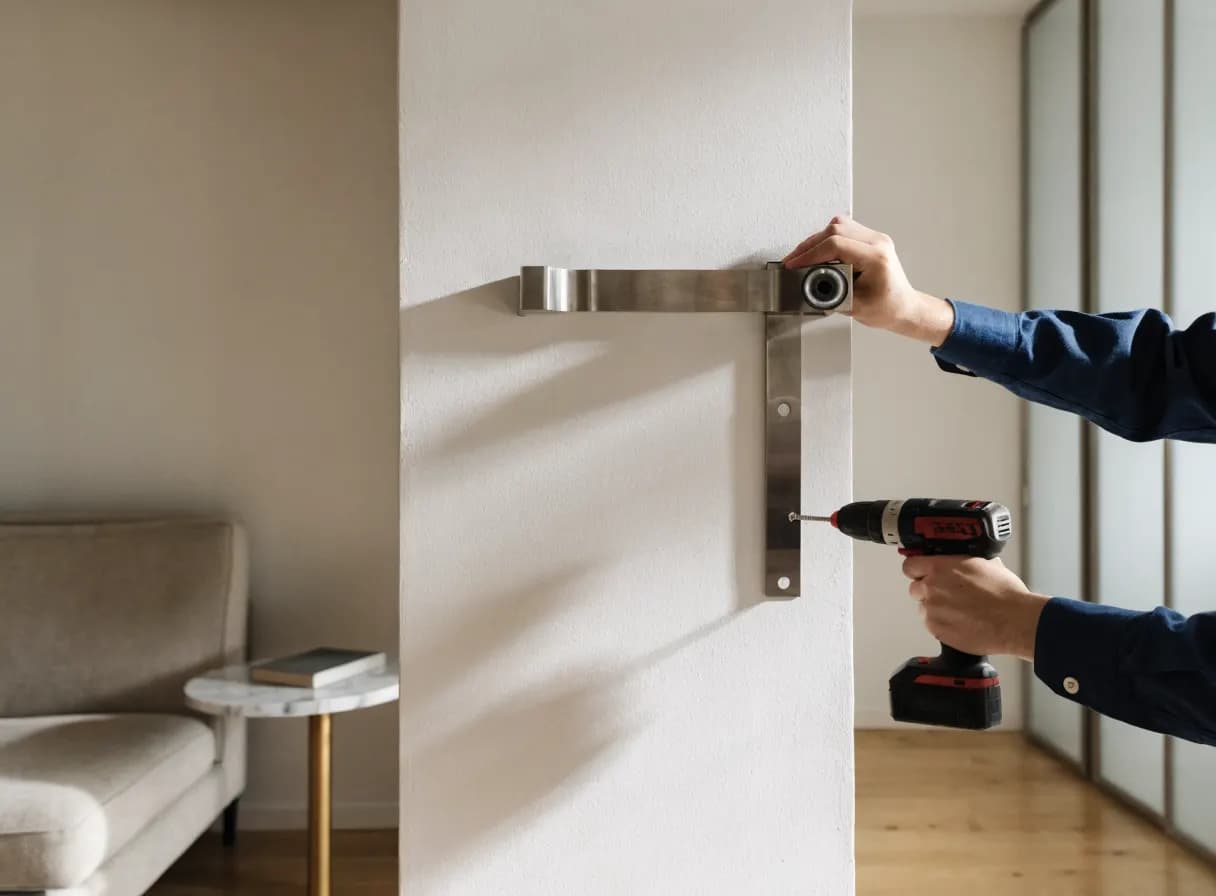
TVs on walls, shelving where clutter lives, and closet systems where the builder left a single rod: these are the upgrades that change how a house functions. TV mounting runs $100 to $300 depending on wall type and cable concealment, anchored to studs or masonry, never drywall anchors alone. Floating shelves, garage storage, entry hooks and benches, and flat-pack furniture assembly are all same-day work through our mounting and assembly service, which starts at $145.
The highest-payoff storage moves in most homes: a real closet system in the primary bedroom, vertical storage in the garage (this valley loves its gear), and an entry drop zone that catches the daily flood of shoes and bags. None requires construction; all require accurate anchoring into studs, which is precisely the kind of small job worth doing right once.
Smart devices: worthwhile, with a wiring caveat
Thermostats, video doorbells, and smart locks are hour-scale installs on existing wiring, and they suit this climate and this market. A smart thermostat earns its keep in a valley where a day can need morning heat and afternoon cooling; doorbells and locks are convenience and peace-of-mind purchases that install for $100 to $250 plus the device. The caveat is always the wiring: a doorbell with no existing transformer, or a thermostat on an incompatible system, turns an hour install into an electrician's visit, so check compatibility, or send us a photo, before buying the device.
The same photo-first rule applies to everything in this guide: most "will this work in my house" questions are answerable from two pictures, and the answer is free.
The right order, and the one-visit trick
Sequence beats enthusiasm: repairs and sealing first, paint second, fixtures and hardware third, storage last. Repairs first because paint should land on sound, patched walls. Sealing early because it pays from day one. Paint before fixtures so the new fan is not taped off over wet walls. Storage last because it anchors into finished surfaces. Running the sequence also surfaces the real condition of things, the patch reveals the wall, the fixture swap reveals the box, while each discovery is still a small course correction.
The money trick is batching: trip costs and minimum charges are fixed per visit, so a day that paints a room, hangs two fans, and swaps a floor's worth of hardware costs meaningfully less than the same list across three bookings. The full economics are in the Boise home repair cost guide.
Ideas that sound small but are not
Some upgrades wear a small-project costume and hide a licensed-trade project underneath. An EV charger is a new 240V circuit. A pot filler is plumbing relocation. Opening the kitchen wall is structural until proven otherwise. A wall oven, a gas range where electric was, a bathroom fan where none existed, all involve new circuits, gas lines, or ducting, and all belong with licensed trades, usually with permits. The dividing line, and who to call in Ada and Canyon County to check, is mapped in when a home repair needs a permit.
We flag these at the quote stage rather than in your kitchen with the wall open. If your list has one of them on it, we will tell you which part is ours and which part needs a specialist, and quote our part flat.
Curb appeal: the outdoor afternoon that changes the whole house
The highest-leverage exterior upgrades are concentrated in the ten feet around the front door, and most of them are single-afternoon installs. The canonical stack: repaint the front door, replace the handleset, swap the porch light for something from this decade, mount new house numbers, and re-caulk and touch up the trim the sun has been working on. Together they run a few hundred dollars installed and reset the first impression of the house, which you get to enjoy every day and which matters disproportionately whenever the house is appraised, photographed, or sold. A solar-dusk porch light timer or a video doorbell rounds out the stack for another hour of work.
Beyond the door, the payoff order outside is gate and fence presentability (a straight, latching gate reads as a maintained house), a hose reel and bib upgrade where winter has been chewing the old one, and shade: a properly anchored shade sail or patio umbrella base makes a west-facing Treasure Valley patio usable two more months a year. The one exterior caution repeats from earlier: anything structural, a pergola, a deck extension, a new fence line on a property boundary, has left small-upgrade territory, and boundary fences in particular are worth a conversation with the neighbor and a look at your plat before anyone digs. The maintenance side of exterior work, keeping what you have sound, is its own guide: the Treasure Valley exterior home care guide.
Where upgrades pay most, room by room
If you are rationing money, rank rooms by hours of daily use, and the ranking is nearly universal: kitchen, primary bath, living room, entry. In the kitchen, the payoff stack is hardware and hinge adjustments, a faucet worth touching, under-cabinet lighting, and paint, together they read as a refresh at a small fraction of renovation money. In the primary bath: fresh caulk lines, a modern faucet and showerhead (which hard valley water has probably scaled anyway), a decent mirror and light, and an exhaust fan that actually moves air. The living room is lighting, fan, mounting, and shelving territory. The entry, inside and out, is paint, hardware, house numbers, and a light fixture, the cheapest square footage on the list to transform.
Bathroom exhaust fans deserve a special mention because they sit at the junction of upgrade and protection. An original builder-grade fan that roars without actually clearing the mirror is failing at its one job, which is getting moisture out of the room before it settles into the caulk, the paint, and the drywall. A quiet, properly rated replacement in the existing housing location is an afternoon job, and in a house whose showers fog the hallway, it quietly cancels a whole category of future repair work. Like-for-like swaps in the same location are handyman scope; new ducting where none existed is not, and the quote will say which yours is.
The rooms that rarely repay upgrade money are the ones guests never see and you rarely occupy: guest bedrooms, storage closets, and the garage interior, with the one exception of garage storage systems, which pay daily in a valley where every household seems to own bikes, skis, and a trailer's worth of gear. Spend unevenly and on purpose: one properly finished room beats three half-nudged ones.
Upgrade patterns around the valley
What counts as the obvious first upgrade differs by housing stock, and the valley has three distinct generations of it. In newer Meridian, Kuna, and Star subdivisions, the builder delivered a sound house with the cheapest acceptable everything: the first-five-years pattern is hardware, lighting, fans, storage, and window coverings, upgrades the build budget skipped. In mid-life Eagle, Star, and suburban Nampa homes, upgrades ride along with the replacement wave: when the original faucet dies anyway, the swap is the moment to buy the one you actually want. In older Boise, Nampa, and Caldwell homes, upgrades and repairs blend, the paint refresh includes patching, the lighting swap may reveal an old box, and the honest quote prices the discovery risk up front.
The city-by-city detail lives in our area guides, from Boise and Meridian to Eagle, Nampa, and Caldwell. One valley-wide constant: whatever the stock, the sealing pass pays first, and the maintenance guide explains why a house that heats and cools as hard as ours rewards it twice a year.
Pick three and send the photos
The way to use this guide is to pick the three upgrades that would most improve your actual week, and price them as one visit. Send us the list with photos, the wall, the fixture, the door, and we will send back a flat quote and a plan for the order of operations. Most upgrade days are booked within the week and done in one trip, and if any item on your list turns out to be a licensed-trade project, the quote will say so plainly.