
The four-question framework
The four-question framework
The DIY decision is not about how handy you are; it is about the job's profile. Four questions sort almost everything. Stakes: what does a botched first attempt cost, a redo or a flood? Skill curve: is this learnable from one video, or is it a reps-based craft like texture matching? Tools: do you own them, and will you use them again? Time: what does the job really cost in Saturdays, counted honestly with store runs and redos included?
Low stakes, shallow curve, common tools: do it yourself, genuinely. High stakes or reps-based craft or one-use tools: hire it. Everything else is the middle, and the middle is where the rest of this post lives.
The great DIY list: start here
The great DIY list: start here
Some jobs are practically designed for homeowners, and doing them builds real competence. Interior painting rewards patience more than skill, and prep is learnable in one room. Swapping cabinet knobs, door handles, and hinges is a screwdriver and attention. Furniture assembly is instructions and stamina. A simple caulk bead along baseboard or a window interior forgives wobbles. Toilet flappers and fill valves are $15 and a video. Furnace filters, smoke detector batteries, dryer vent cleaning, and tightening the eternally loosening towel bar are maintenance, not craft.
Do these yourself without hesitation. They teach you your house, and knowing your house is worth more than the savings.

The deceptive middle: jobs that look like the first list
The deceptive middle: jobs that look like the first list
A handful of jobs wear DIY clothing and punish it. Drywall patching is the classic: the patch succeeds, the texture betrays it, and the flat spot on an orange-peel wall reads from across the room forever. Door planing removes wood permanently, and the line between "still rubs" and "daylight gap" is an eighth of an inch. Tub and shower caulking fails in months unless the old bead is fully stripped and the joint bone dry, which is the tedious 80 percent of the job videos compress to seconds. Ceiling work multiplies all of it while adding a ladder.
None of these are dangerous. They are visible, which is its own kind of expensive. The pattern: when the hard part of a job is the finish rather than the function, the pro earns their fee. It is why drywall and door and trim work headline our request list, and half of it arrives as "I started this and would like it to stop looking like I did."
The never-DIY list, briefly
The never-DIY list, briefly
Gas, panels, structure, roofs. Gas appliance connections and gas lines; electrical panel work and new circuits; cutting into studs, joists, or anything holding the house up; and walking a roof. The failure modes here are fire, collapse, and falls, not cosmetic regret, and most of this work legally requires permits and licensed trades regardless of skill, as our Boise permit guide lays out. The test of an honest handyman is that this list is refused there too. We fix outlets and fixtures on existing circuits; we do not touch panels, and we will name the right electrician instead.
The honest math of a DIY Saturday
The honest math of a DIY Saturday
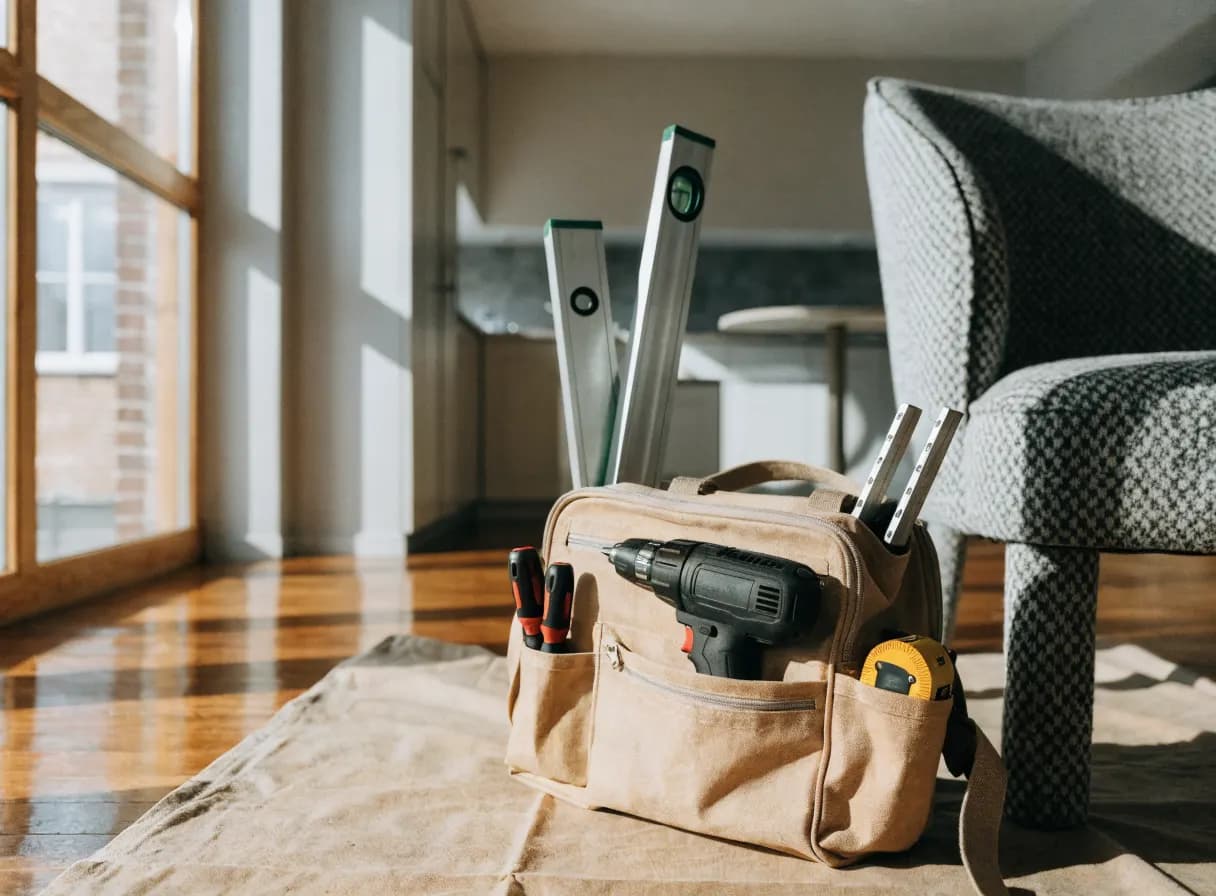
DIY looks free because we price our weekends at zero. The real ledger for a typical middle-list job: materials, often bought 1.5 times as first choices turn out wrong; a tool purchase that may never be used again; two or three store trips at 40 minutes each; the attempt; sometimes the redo. Against that, a handyman visit at Treasure Valley market rates, quoted flat, warrantied, and done while you do something else.
Batching flips the equation hardest. Six accumulated jobs are six DIY Saturdays or one two-to-three-hour professional visit; per-job cost drops to its floor, and our per-job price guide shows the numbers. If you enjoy the work, none of this applies; a satisfying Saturday of successful repairs needs no justification. This section is for everyone doing the third store run out of obligation.
The hybrid play: DIY the forgiving parts
The hybrid play: DIY the forgiving parts
You do not have to pick a side for the whole house. A sensible split many of our regulars use: homeowner handles paint, hardware, assembly, and maintenance; we handle finish-critical, water-adjacent, and ladder work, batched into a visit or two a year. Some pair it with supplying their own fixtures, which our materials guide covers. And when a DIY attempt stalls, hand it over early: unwinding a little is cheap, unwinding a lot is not, and we finish started projects without commentary. Everyone's garage holds one abandoned project; there is no shame in it, only carrying costs.
Sort your list in one message
Sort your list in one message
Send us your repair list and we will sort it honestly: DIY-able, worth hiring, and needs-a-licensed-pro. We will quote flat prices on the middle column and point you to the right trades for the third, and if an item is genuinely a ten-minute DIY, we will say so rather than book it. That straightness is the whole pitch. We serve Boise, Meridian, Eagle, Nampa, Kuna, Star, Middleton, Garden City, and Caldwell. Get in touch whenever the list is ready.