The short answer
Expand section
The short answer
Small stuff is included; big stuff is a decision you make together before work starts. Across the Treasure Valley, the standard pattern is that consumables, screws, anchors, caulk, patch compound, shims, wire nuts, live on the truck and inside the price. Purchased items, the faucet, the ceiling fan, the boards, the door slab, are handled by agreement: you buy them, or the handyman buys them and bills them, or they are folded into a flat quote. Every model works. The only wrong version is the one nobody discussed until the invoice.
This post lays out how each model plays out in practice, because the materials question is the most common source of small friction on otherwise happy jobs, and it is entirely avoidable.
Consumables: the stuff you never think about
Expand section
Consumables: the stuff you never think about
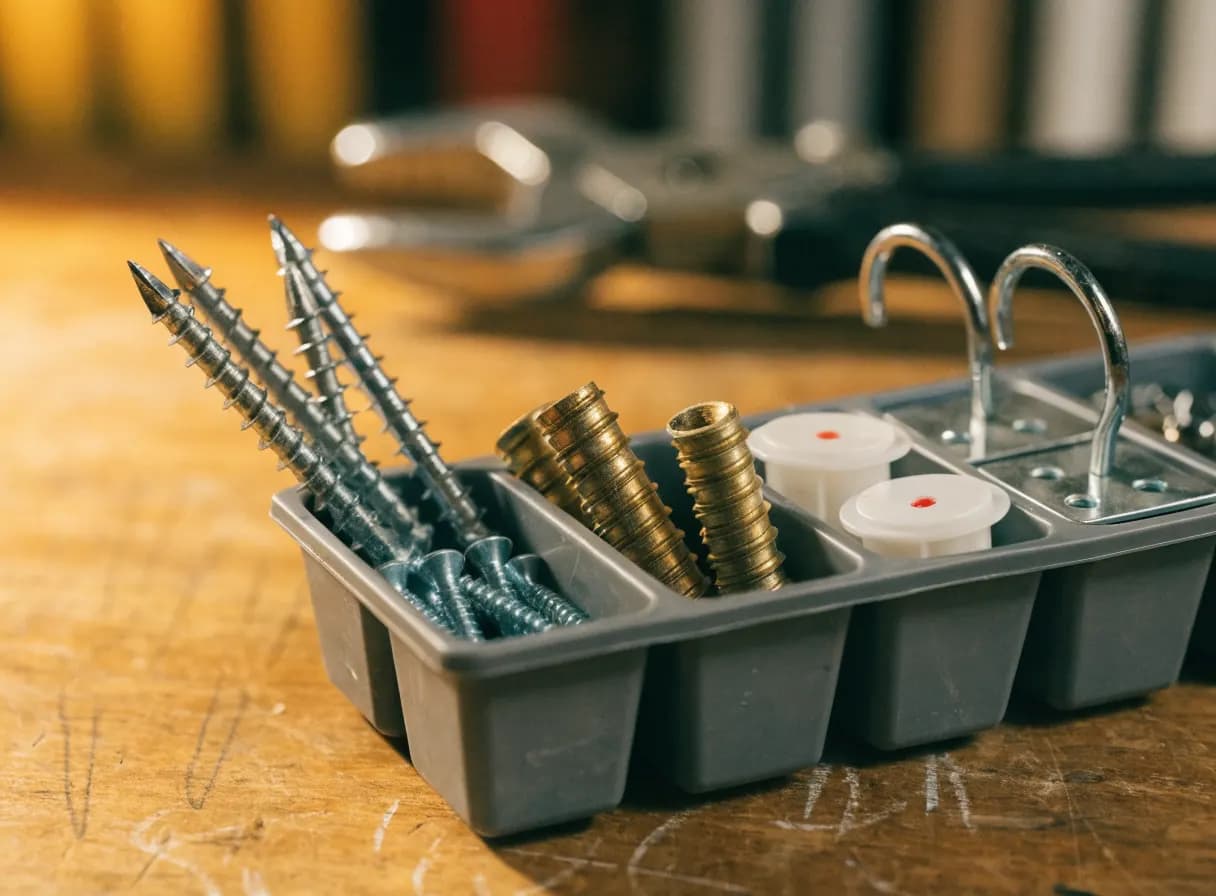
A well-stocked truck is half of what you hire. The screws that match your hinge, the anchor rated for your TV mount, the right caulk for a wet tub joint versus an exterior window, setting compound versus lightweight mud: a working handyman carries all of it, and the price of a job assumes it. This is invisible when it works, and it is a real difference from DIY, where a "one hour" fix routinely includes a store run for a $4 part. When we quote flat prices, consumables are inside the number.
Model one: you supply the materials
Expand section
Model one: you supply the materials
Homeowner-supplied works best for visible, style-driven items. The faucet you will look at for ten years, the light fixture over the table, the paint color, the shelving: you should absolutely choose those, and buying them yourself skips any markup and puts the style decision fully in your hands. We install what you bought; this is everyday practice on fixture swaps and mounting work.
Where it goes wrong is technical fit. The classic failure: a beautiful faucet for a three-hole sink arriving at a one-hole sink. Or the fixture missing its mounting bracket, discovered mid-job. A wrong part converts one visit into two, and the second visit costs more than the markup you avoided. Protect yourself with three habits: buy after the job is scoped, not before; open the box and confirm parts the day it arrives; and send a photo of the product label before the appointment so mismatches get caught while they are free.
Model two: the handyman supplies and bills
Expand section
Model two: the handyman supplies and bills
Pro-supplied works best for technical and boring items. The right shutoff valve, the correctly rated anchor, matched trim profiles, pressure-treated versus cedar for a fence repair: these reward knowledge more than taste, and having the person doing the install pick the part removes an entire category of error. The materials then show up as their own line, typically at cost plus a modest markup that pays for sourcing time and for owning the problem when a part is wrong.
The markup question deserves a straight answer: it is normal, and it usually buys more than it costs. Your alternative is your own hour, your own fuel, and your own risk of a second trip. What you should expect in exchange is transparency, materials stated as a line item, not buried, and that is a fair test of anyone you hire. Vagueness about materials before the job predicts vagueness on the invoice after it.
Model three: everything in one flat number
Expand section
Model three: everything in one flat number
For defined jobs, folding materials into a flat quote is often the cleanest experience. "Re-caulk the tub, $X" or "repair the gate, replace two pickets, $Y" ends the accounting entirely: one number, agreed upfront, and the risk of material prices or quantities running over sits with us. This suits repair work, where materials are predictable and rarely style-driven. It suits fixture installs less, because your fixture taste sets the price, which is why fixture jobs usually quote as labor plus your fixture or a stated materials line.

The warranty angle nobody mentions upfront
Expand section
The warranty angle nobody mentions upfront
Who supplied the part decides who owns the outcome. When we supply both part and labor, the whole job has one accountable party: if the part fails, the fix is our problem to coordinate. When you supply the part, the part's warranty is between you and the manufacturer, and the labor to swap a failed part is generally a new visit, since the installer did not choose it. Neither arrangement is wrong, but it belongs in the decision: for something buried in a wall or critical to keep working, single-party accountability has real value. For a lamp you can live without for a week, less so.
What to agree on before any job starts
Expand section
What to agree on before any job starts
Four questions settle the whole topic in two minutes. Which items am I supplying, if any? Are consumables included in the price? If you are buying materials, do they appear as their own line? And if a homeowner-supplied part turns out wrong or incomplete, what does the return visit cost? Any competent handyman answers these easily, and getting the answers in the written quote is standard practice, not an imposition. It is the same upfront-clarity test we recommend in pricing common repairs, applied to the other half of the invoice.
Tell us the job; we will sort the materials
Expand section
Tell us the job; we will sort the materials
Send the list, and mention anything you have already bought or want to pick yourself. We will quote with materials handled whichever way fits: your fixture and our labor, or our sourcing as a stated line, or one flat number for defined repairs. Consumables are always included. We work across Boise, Meridian, Eagle, Nampa, and the rest of the Treasure Valley. Get in touch and the invoice will hold zero surprises.