The short answer
Expand section
The short answer
The cheapest energy problem in most Boise houses is air leaking through gaps you can fix in an afternoon. Furnaces and air conditioners get the attention, but they are expensive to touch and belong to licensed HVAC trades. The building envelope, the doors, windows, penetrations and hatches that leak the conditioned air out, is cheap to fix, and every fix on this list is small enough to be handyman work. In a climate that swings from below freezing to over a hundred degrees, sealing pays twice a year.
Weatherstrip the exterior doors
Expand section
Weatherstrip the exterior doors
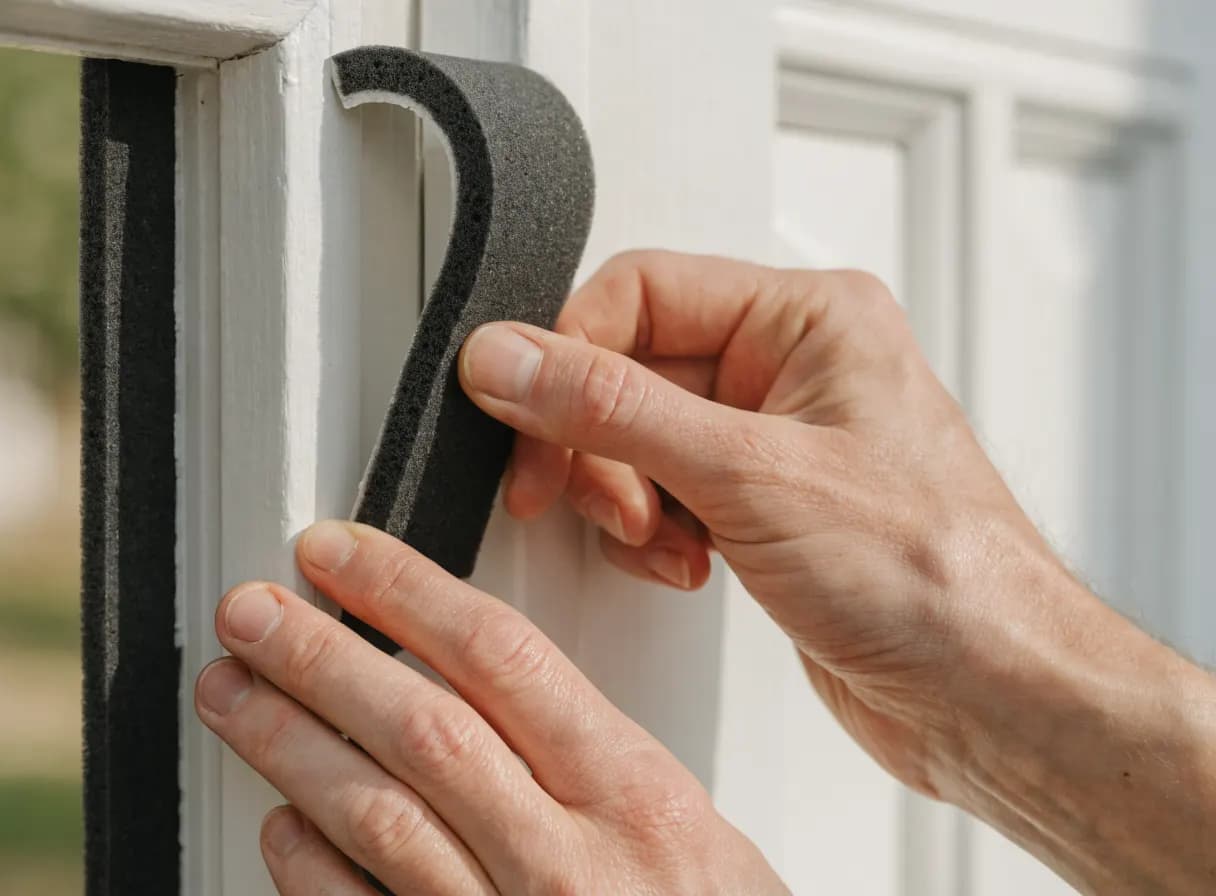
Stand inside on a bright day and look at the edges of each exterior door. Daylight means air, and air means money. Door weatherstripping is a compressible seal in the frame, and it wears out: it flattens, tears, and falls off, usually years before anyone replaces it. A worn seal leaks heated air all winter and cooled air all summer, and it does it around your most-used doors.
Replacement is fast and cheap. Matching the right profile to the door frame is the only skill involved, and the difference is immediate, especially in a room that always felt drafty. While we are at the door we also check the latch and strike plate, because a door that does not pull tight defeats a new seal, and adjusting that is standard carpentry and trim work.
Add door sweeps at the threshold
Expand section
Add door sweeps at the threshold
The gap under a door is the biggest single hole in most building envelopes. A quarter-inch gap under a 36-inch door is about nine square inches of open hole, the equivalent of leaving a window cracked all year. Garage-to-house doors are the worst offenders, because the garage is unconditioned and nobody feels the draft standing in a hallway.
A door sweep closes the gap for a few dollars in materials and a few minutes of installation. On uneven thresholds we use an adjustable sweep so the door still swings freely. This is the fix with probably the best cost-to-benefit ratio in the entire house.
Caulk the gaps, inside and out
Expand section
Caulk the gaps, inside and out
Caulk is the cheapest material on a house doing one of the most important jobs, and it fails on a schedule. Outside, the beads around window frames, door frames, hose bibs, dryer vents and anywhere pipe or wire enters the wall dry out and crack in our high-desert sun. Each failed bead leaks air, and worse, lets water into the wall assembly. Inside, gaps at baseboards on exterior walls and around window trim do the same quietly.
Recaulking is core home maintenance work: cut out the failed bead, clean, and run a new one with the right product for the location, silicone where water lives, paintable acrylic where appearance matters. A full exterior recaulk on a typical house is a few hours of labor, and it is as much water protection as energy work.
Seal and insulate the attic hatch
Expand section
Seal and insulate the attic hatch
Most attic hatches are a large, uninsulated, unsealed hole in an otherwise insulated ceiling. Your attic may have a foot of blown insulation everywhere except the one panel you can reach, which is often bare wood or drywall with nothing above it. Warm air rises, finds the hatch, and leaves; in summer the hundred-forty-degree attic radiates back down through it.
The fix is weatherstripping around the hatch lip and rigid foam insulation on the back of the panel. It takes under an hour, costs little, and brings the worst square meter of your ceiling up to the standard of the rest. Pull-down attic stairs get an insulated cover box instead, which is an equally quick install.
Gasket the outlets on exterior walls
Expand section
Gasket the outlets on exterior walls
Every outlet and switch on an exterior wall is a small hole through the drywall into the wall cavity. Hold a hand near one on a cold windy day and you can feel it. Individually they are minor; a house has dozens of them, and together they add up to a real leak.
Foam gaskets behind the cover plates are about the cheapest energy fix that exists, and child-safe plug seals close the remaining slots in unused outlets. This is a classic add-on job: not worth a visit on its own, entirely worth doing while we are already there with the covers off.

Insulate hot water lines and check the heater
Expand section
Insulate hot water lines and check the heater
Exposed hot water pipes in a garage or crawl space shed heat you paid for before the water reaches the tap. Foam pipe insulation is inexpensive, cuts that loss, and shortens the wait for hot water at fixtures far from the tank. While we are at the water heater we also check the temperature setting, 120 degrees serves most households and stops the tank from working harder than it needs to, and look over the fittings for early leaks.
Water heater replacement itself is licensed plumbing work and out of handyman scope, but the insulation and inspection around it are exactly the kind of small job that never justifies its own service call and always justifies being on the list.
Ceiling fans, window film, and the honorable mentions
Expand section
Ceiling fans, window film, and the honorable mentions
A few more small jobs earn their place on the list without being sealing work. Ceiling fans installed where a fixture already exists, standard handyman scope, let you raise the thermostat a couple of degrees in summer; flipping them to reverse in winter pushes warm air back down. Reflective window film on big west-facing glass takes real load off an air conditioner during a Boise July. Fresh filters, clear dryer vents, and closed fireplace dampers round out the list.
None of these transforms a utility bill alone. Together, on a house that has had none of them done, the change is noticeable, and every one of them is an hours-not-weeks job.
What the whole list costs
Expand section
What the whole list costs
The entire air-sealing package is typically a half-day visit plus modest materials. Treasure Valley handyman labor generally runs $60 to $120 per hour at market rates, and the materials, weatherstripping, sweeps, caulk, foam board, gaskets, pipe insulation, are cheap relative to almost anything else you can buy for a house. We quote the whole list as one flat number after a quick walkthrough, so there is no meter running.
Compare that against the alternatives people usually consider first, new windows or a new HVAC system, and the sequencing logic is clear: seal the envelope first, because it is two orders of magnitude cheaper, and let the expensive decisions wait for a house that is no longer leaking.
Where to go from here
Expand section
Where to go from here
If you want the whole list knocked out in one trip anywhere in Boise, Meridian, Eagle, Nampa, Kuna, Star, Middleton or Caldwell, get in touch and tell us how many exterior doors you have and roughly how old the house is; that is enough for a solid quote. For the bigger picture of keeping a house ahead of its problems, start with our seasonal maintenance checklist for Boise homes, where most of these fixes appear in their fall slot.