
The short answer
The short answer
Most repairs on a homeowner's list take one to three hours each, and the exceptions are exceptions for visible reasons. Dry time makes drywall span days. Hidden corrosion makes plumbing swaps unpredictable. Everything else, doors, fixtures, fans, hardware, caulk, fence boards, is measured in hours, which is precisely why it is handyman work rather than contractor work. What follows are honest ranges for the jobs we get called for most across the Treasure Valley, with the reasons the ranges are ranges.
Drywall patches: short visits across two or three days
Drywall patches: short visits across two or three days
Drywall is the job where calendar time and working time part ways. A proper patch means cutting back to sound material, backing the hole, setting the patch, and then two or three coats of joint compound, each of which must dry before the next. Then texture, then paint. The hands-on time might total two or three hours; the coats need their days regardless.
This is worth internalizing because it is the most common place homeowners get oversold. One-visit "paint-ready" patches skip coats, and skipped coats read as a visible bulge or a texture mismatch under raking light, forever. Our drywall repair service schedules the return visits upfront so the dry time costs you nothing but patience.
Faucets, toilets, and disposals: under two hours, usually
Faucets, toilets, and disposals: under two hours, usually
Minor plumbing swaps are fast when the old parts cooperate, and the old parts are the whole story. A faucet replacement typically runs one to two hours. A toilet internal rebuild is under an hour; a full toilet swap, one to two. A garbage disposal replacement, about an hour. These are the bread and butter of minor plumbing repair work.
The ranges stretch when age shows up: seized shutoff valves, corroded mounting hardware, supply lines that should not be reused. A pro budgets for some of this and tells you at the sink when yours has more of it than usual. The boundary to know: when the problem moves from the fixture into the pipes in the wall, it stops being handyman work and gets referred to a licensed plumber.
Light fixtures, fans, and switches: one to two hours
Light fixtures, fans, and switches: one to two hours
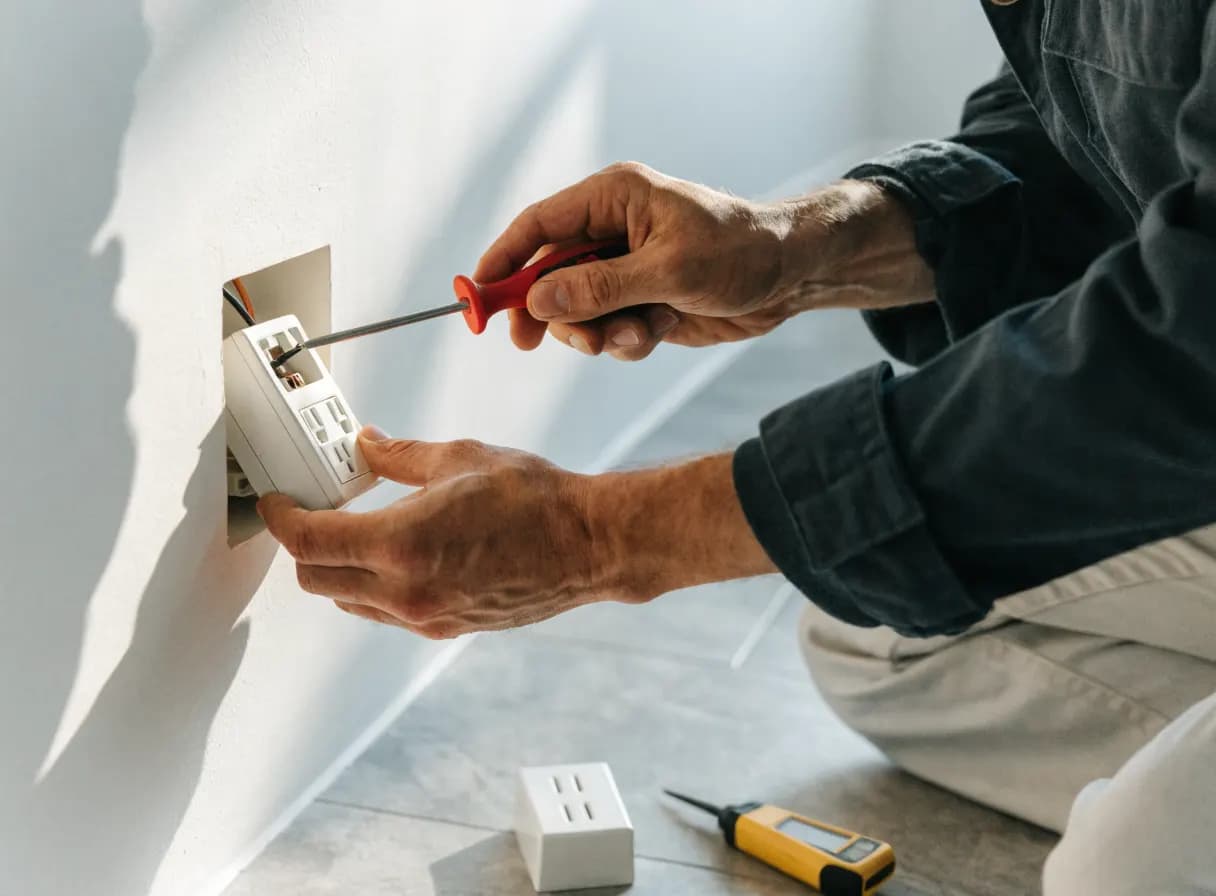
Like-for-like electrical swaps are quick; the box in the ceiling decides the rest. Replacing a light fixture typically takes under an hour. A ceiling fan where a fixture already hangs runs one to two hours, including assembly and balancing, with one caveat: fans need a fan-rated electrical box, and if the existing box is not rated for the weight and wobble, swapping it adds real time. Switches, dimmers, and outlets on existing circuits are quick swaps.
Anything involving new wiring, new circuits, or the panel is licensed electrician territory, not a longer handyman job. The line is legal, not a matter of confidence, and we explain it fully in handyman versus contractor.
Doors and trim: about an hour each, satisfaction immediate
Doors and trim: about an hour each, satisfaction immediate
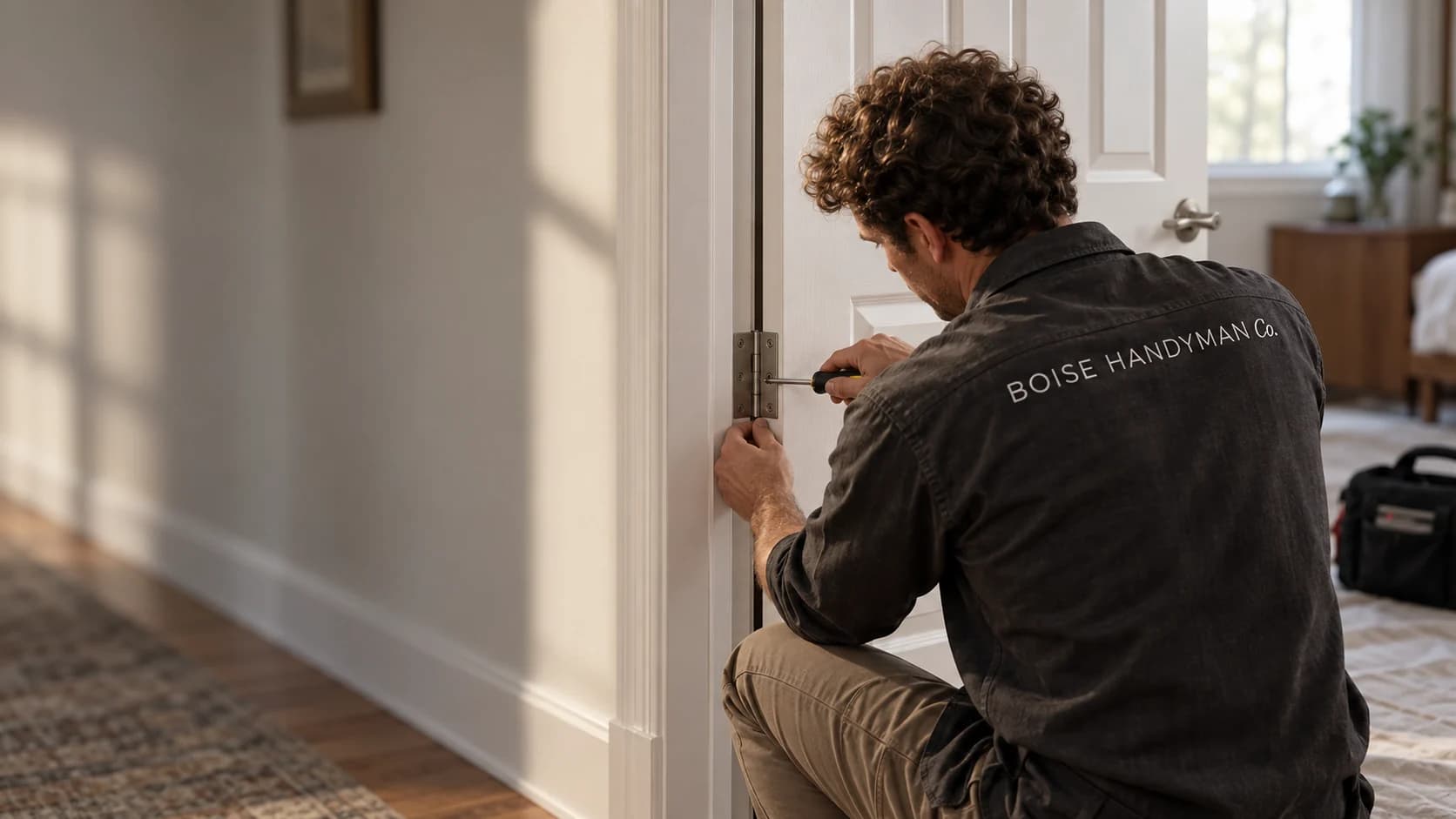
A sticking door is usually an hour, and it is the best hour on the list. Most sticking, sagging, and latch problems come down to hinge screws, strike plate alignment, or a modest plane of the slab edge, all part of standard carpentry and trim repair. Replacing an interior door slab runs longer, more like two hours, since it needs hinges mortised and hardware bored to match.
Trim work scales with length rather than difficulty: a damaged baseboard section or a chewed door casing is an hour or so; re-running trim around a whole room is a half day. Caulk and paint touch-up at the end is what makes the repair disappear, and it is included time, not extra.
TV mounting and assembly: an hour, plus honesty about walls
TV mounting and assembly: an hour, plus honesty about walls
A standard TV mount on wood studs takes about an hour; what changes the number is what the wall is made of. Tile, brick, and steel studs each slow things down, and a full-motion mount on a corner takes longer than a fixed mount on an open wall. Concealing the cords inside the wall adds time and, past a point, becomes an electrical question.
Furniture assembly is honest manual labor with predictable times: a bookcase under an hour, a typical bed or desk one to two, the notorious wardrobe systems a half day. If the box has been sitting in your garage since spring, you are the person this service exists for.
Fence boards, gates, and gutters: one to three hours
Fence boards, gates, and gutters: one to three hours
Exterior repairs run the widest ranges, because weather is the co-author. Swapping a handful of fence boards takes about an hour. A sagging gate, rehung and squared with a new latch, one to two. A rotted fence post is the wildcard: pulling and resetting a post in concrete is a two-to-three-hour job. Gutter work, re-securing sagging runs, sealing a seam, cleaning, typically runs one to three hours depending on the house.
These are the classic fall-and-spring jobs in our seasonal maintenance rhythm, and they cluster well: one exterior visit often covers fence, gate, and gutters together under our fence, deck and gutter service.
Why every honest estimate is a range
Why every honest estimate is a range
The visible part of a repair is the predictable part. The range covers what the visible part is hiding. Seized valves, unbacked drywall, posts set in dirt, previous owners' improvisations: every experienced handyman has met all of them, which is exactly why experienced estimates come as ranges with named conditions rather than false precision.
What you should expect is narration when reality diverges: this valve is seized, here is what that adds, do you want it done today. A surprise explained at the moment it appears is process. A surprise appearing on the invoice is a problem, and a predictable one.
The real answer: batch the list
The real answer: batch the list
The most important time number is not any single repair. It is the trip. Driving to your house costs the same whether one thing gets fixed or six, which is why almost every outfit has a minimum charge, and why the smart move is to book a list, not an item. A half-day visit clears four to six typical repairs; a full day clears a season of accumulated annoyances.
Send the list with photos when you book, so parts get staged and nothing waits on a supply run. Our guides to what a first visit looks like and budgeting a punch list cover how to set that up.
Where to go from here
Where to go from here
If items on this page sound like your house, that is the list, and it is probably a single visit. We work across Boise, Meridian, Eagle, Nampa, Kuna, Star, Middleton and Caldwell, and we quote in writing before work starts. Send your list over with photos and we will tell you honestly how many hours it is.