The short answer
Expand section
The short answer
A good first visit has three parts: a walkthrough, a written quote, and, for most small jobs, the work itself, same day. There is no mystery to it, but there is a right way to use it. The trip to your house is the expensive part of small-job work, so the more decisions that happen before the truck arrives, and the more jobs that get batched into the visit, the more repair you get per dollar. This article walks through the visit in order, with what to have ready at each step.
Before we arrive: the list and the photos
Expand section
Before we arrive: the list and the photos
The most valuable thing you can do costs nothing: write the whole list and send photos. A photo of the sagging gate, the stained ceiling patch, the faucet model, and the wobbly fan tells an experienced eye most of what the walkthrough would. It lets the right parts and materials get staged on the truck, which is the difference between one trip and two.
Walk the whole house when you make the list, not just the rooms with the obvious problems. The sticking door you stopped noticing in 2023, the toilet that runs sometimes, the missing caulk bead in the guest shower: add all of it. Small jobs cost the least when they ride along with other small jobs, a point our guide to budgeting a repair punch list makes in detail.
The walkthrough
Expand section
The walkthrough
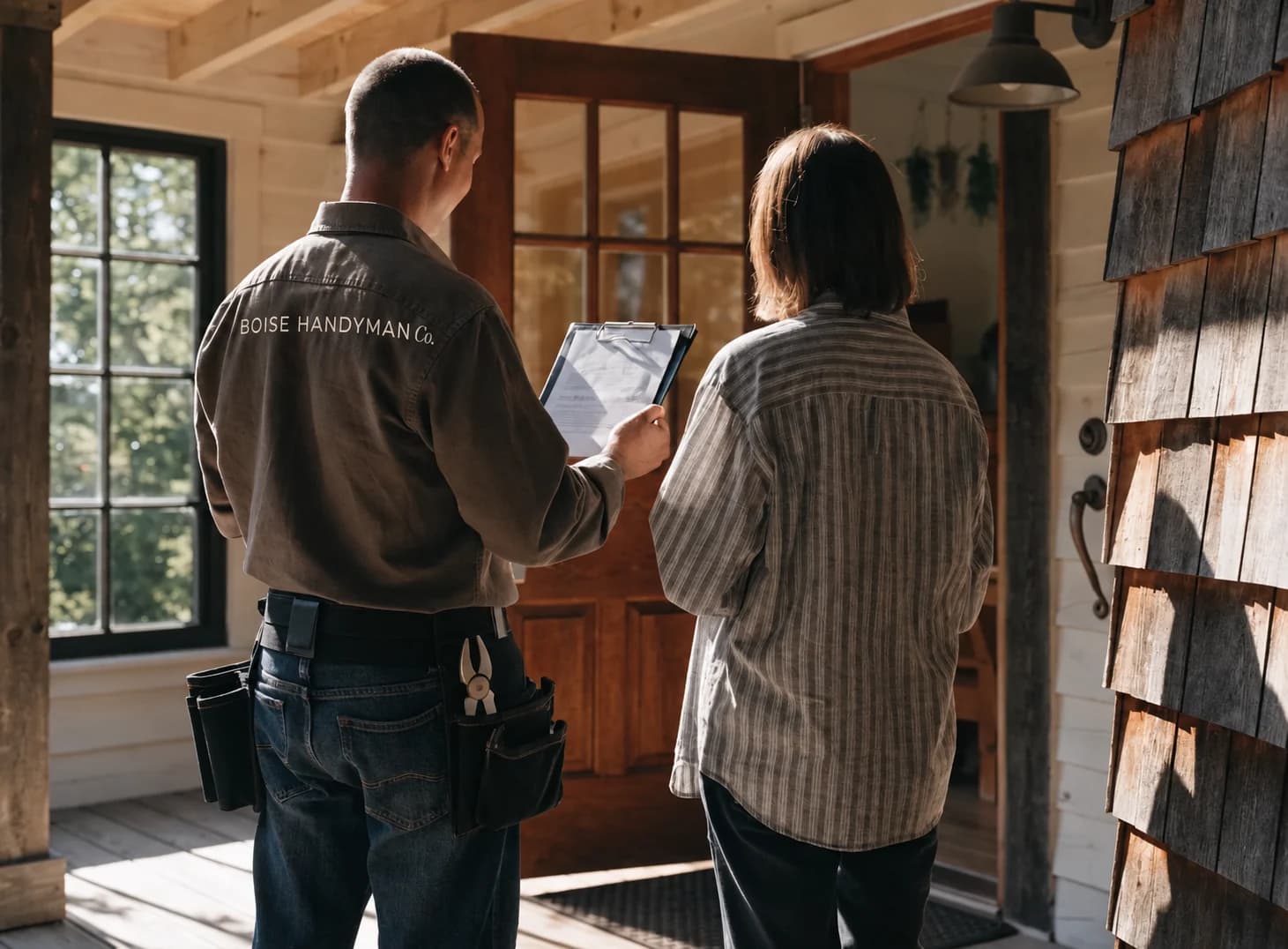
Expect the visit to start with fifteen or twenty minutes of walking and pointing. This is where the list on paper meets the house. Each item gets a look, a question or two, and a quiet assessment: what it needs, how long it takes, whether anything about it is not what it appears. A water stain gets probed for softness. A sticking door gets swung to see whether the problem is the hinge, the strike, or the slab.
This is also your window to add things. Almost every walkthrough ends with "while you are here, could you also look at" and the answer is yes, that is the point. Nobody minds a growing list; the trip is already paid for.
The quote, in writing, before work starts
Expand section
The quote, in writing, before work starts
Before tools come out, you should know what the work costs, and it should be in writing. For most visits that means a short written quote on the spot: each item or group of items, a price, and a note about anything conditional, like what happens if the ceiling stain turns out to be soft underneath. Writing does not need to mean formal paperwork; a text or email that states scope and price does the job.
If you are comparing several outfits, this is the artifact to compare. Our guides to comparing handyman quotes and hourly versus flat-rate pricing cover how to read what you are handed. The short version: a real quote tells you what is included, and a vague one tells you who you are dealing with.
What gets done same-day
Expand section
What gets done same-day
Most small repairs are finished during the first visit, because that is the whole economy of handyman work. Door and hinge adjustments, faucet and disposal swaps, toilet repairs, light fixture and fan installs, TV mounting, caulking, hardware, weatherstripping, small trim repairs: if the parts are standard and on the truck, these happen on the spot.
Our breakdown of how long common repairs take puts numbers on this, but the pattern is simple: most individual items run one to two hours, and a good visit clears several of them. The satisfying version of this business is a list that was annoying you for a year, gone by dinner.

What honestly takes a second trip
Expand section
What honestly takes a second trip
Two things force a return visit: dry time and parts. Drywall repair is the classic case. Joint compound needs to dry between coats, so a proper patch is two or three short visits no matter who does it, and anyone promising paint-ready drywall in one trip is skipping coats. Some paints and caulks have cure windows too. The other driver is special-order parts, a discontinued faucet cartridge, a specific gate hinge, where the honest move is to order it and schedule the return.
What you should expect either way is to know upfront. A return trip that was named in the quote is process; a surprise return trip billed as extra hours is a problem.
When something unexpected turns up
Expand section
When something unexpected turns up
The professional handling of a surprise is: stop, show you, and re-quote before proceeding. Houses hide things. A soft subfloor under a toilet, crumbling backing behind old caulk, a previous owner's creative wiring at a fixture. None of this is anyone's fault, and none of it should be handled silently.
What you want to hear is the same structure every time: here is what I found, here is the photo, here is what it changes about the price and the plan, and here is where it becomes a licensed-trade job rather than a handyman job if it does. That last part matters; a surprise that turns out to be a failing pipe in a wall gets referred to a plumber, not improvised. Our article on where handyman scope ends maps that boundary.
Payment and what comes after
Expand section
Payment and what comes after
Payment happens when the work is done and you have walked it with us. That final walkthrough mirrors the first one: each item on the list, looked at together, marked done. Expect standard payment options; expect a receipt; and on jobs with materials, expect the materials to appear as what they cost.
A deposit has one legitimate purpose, covering special-order materials, and full prepayment has none. If a first visit with any outfit ends with a demand for the whole price before work is scheduled, read our list of handyman red flags before you send anything.
Where to go from here
Expand section
Where to go from here
If you have a list building up anywhere in Boise, Meridian, Eagle, Nampa, Kuna, Star, Middleton or Caldwell, send it over with photos and we will come back with a quote, usually without needing a separate estimate trip. If you are still choosing who to call, take the questions worth asking with you; a good outfit answers all of them without flinching.