
What drywall repair costs here
What drywall repair costs here
Most drywall repairs in the Boise area cost $150 to $400 per patch in 2026 at market rates. That covers the standard damage catalog: doorknob holes, stud-bay openings cut for plumbing or electrical access, stress cracks over doors and windows, corner bead dings, and anchor pull-outs. Ceiling repairs and water damage price higher, typically $250 to $600, plus whatever caused the water. Whole rooms and new-hang work move out of repair pricing into project pricing.
Our own drywall repair service starts at $149, flat-quoted from photos in most cases. What follows is where the money goes and what moves the number, so the quote you get, from us or anyone, makes sense.
Where the money goes: anatomy of a proper patch
Where the money goes: anatomy of a proper patch
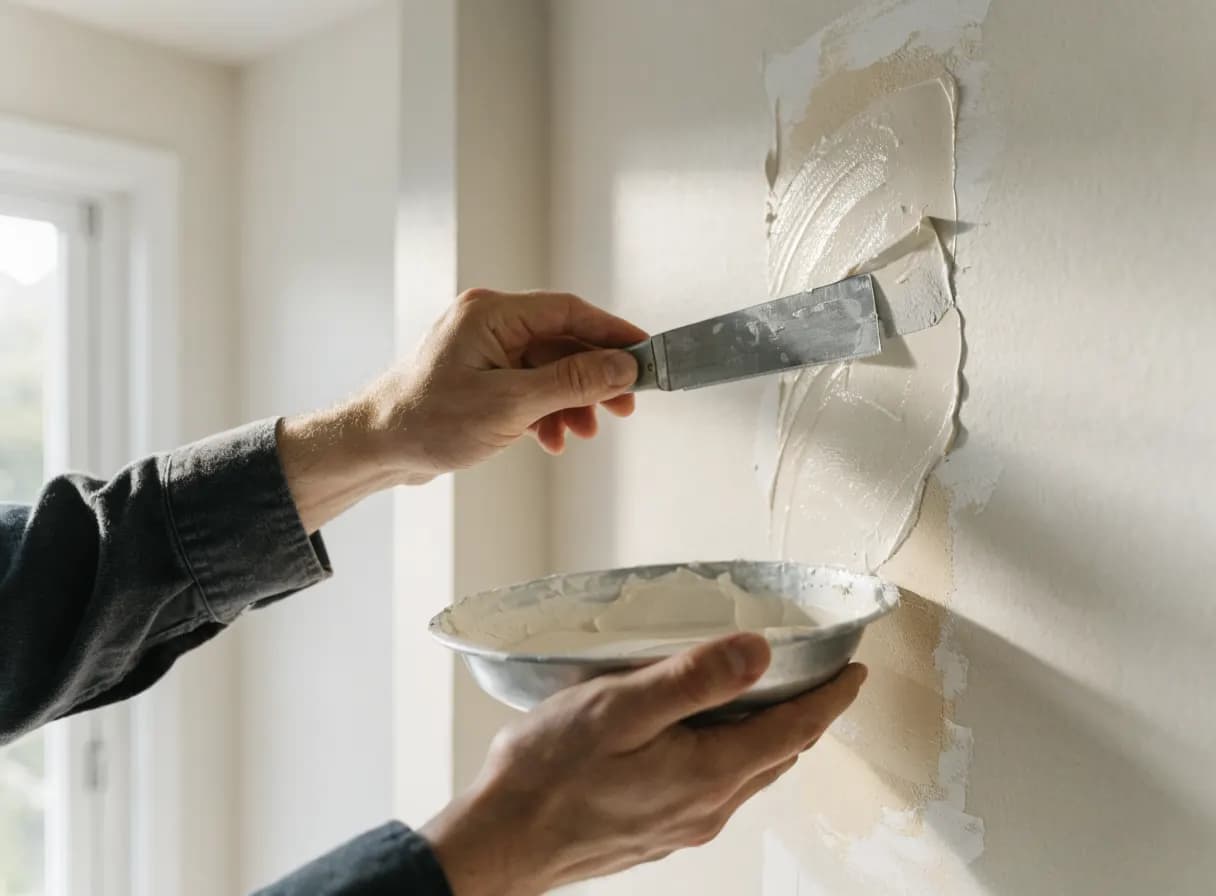
The hole is maybe a tenth of the job. A repair that disappears takes backing or a California patch, tape, and three progressively wider coats of joint compound with drying time between them, then sanding, then texture, then primer. Skip the coats and the patch telegraphs through paint as a shallow crater. Skip the texture and it reads as a smooth rectangle on an orange-peel wall, visible from the hallway forever.
Drying time is why drywall pricing includes returns. A quality patch is usually two or three short visits or one visit with setting-type compound, and either way the labor is the same skilled sequence. When a price seems high for "a hole", this sequence is what it actually buys.

Texture matching: the Boise-specific skill
Texture matching: the Boise-specific skill
Nearly every Treasure Valley house has textured walls, and texture is where repairs succeed or fail. Orange peel and knockdown dominate here, with hand textures in older Boise bench and North End homes. Matching means duplicating spray pressure, splatter size, and knockdown timing so the new area blends into the old, then feathering the edges so no boundary shows. It is a reps-based skill; the person who does it weekly gets it right, and the difference is the entire visual outcome of the repair.
This is also the honest answer to why DIY drywall repairs disappoint. The patching is learnable in an afternoon. The texture is not, and a flat spot on a textured wall is precisely the thing eyes catch. Our post on DIY vs hiring a handyman uses drywall as a case study for good reason.
What moves the price up or down
What moves the price up or down
Five variables set the number. Size, in practice: is it spackle, a patch, or a new piece of sheet. Location: ceilings cost more than walls, stairwells and high walls add ladder work. Texture: heavy or unusual textures take longer to blend than light orange peel. Cause: impact damage is simple, water damage adds drying and cause-fixing, recurring cracks add investigation. And count: the second, third, and fourth patches in the same visit are far cheaper than the first, because the setup, the mud, and the trips are shared.
That last one is the practical takeaway. Walk the house before booking and list every ding, crack, and anchor hole. A patch tour that fixes eight spots costs nothing like eight separate repairs, and it is the single best value in the common repair price list.
Water damage: the patch is step two
Water damage: the patch is step two
Stained or soft drywall is a symptom, and patching a symptom buys the same repair twice. The sequence that works: find the source, roof, flashing, a weeping supply line, failed caulk above, condensation; fix it; confirm the cavity is dry; then repair the drywall. Brown rings on a ceiling sometimes trace to a one-time event, an overflowed tub, a past roof leak already fixed, in which case seal and patch away. But nobody should skip the question. When we quote water-damage drywall, finding the cause is part of the conversation, and if the cause is roof-level or inside a wall system, we say plainly whether it is our fix or a referral.
The paint question
The paint question
Every patch ends at the same fork: touch up the spot, or repaint the wall. Paint fades and sheens shift with age, so touch-up from the garage can rarely vanishes, especially in satin or eggshell under raking light. The reliable route is painting the full wall, corner to corner, where edges hide naturally. We quote drywall with primer included and offer painting either way, with a straight answer about which option will actually look finished in your light and your paint's age. Budget roughly $100 to $300 more for a single-wall repaint at market rates, and consider batching walls if several rooms carry patches.
Get a flat quote from two photos
Get a flat quote from two photos
Drywall is the easiest repair in the house to quote remotely. One photo close up, one from across the room, and a note about what happened: that is enough for a flat price on most patches. Batch every wall wound in the house into the same visit and the per-patch math improves sharply. For where drywall sits in overall handyman pricing, see what a handyman costs in Boise, then send us your photos. We patch, texture, and blend across the whole Treasure Valley.