The short answer
Expand section
The short answer
Treasure Valley fences fail from the ground up, and they fail in sections, which is why repair usually beats replacement. Wind loads the panels, sun cooks the boards, sprinklers soak the posts, and clay-heavy soil holds moisture right where the wood enters the ground. The visible symptoms, a lean after a storm, a gate that drags, gray splitting pickets, almost all trace to a repairable cause. This guide covers the local failure modes, the standard fixes, and the honest math on when a fence is done.
Why fences have a hard life here
Expand section
Why fences have a hard life here
Four local forces do most of the damage. First, wind: valley storms load a solid six-foot cedar fence like a sail and find every weak post. Second, sun: high-desert UV grays and checks unsealed cedar within a few seasons. Third, irrigation: this valley waters its lawns hard all summer, and sprinkler heads spraying the fence line keep the bottom foot of wood wet on a daily cycle. Fourth, soil: clay-heavy ground holds that moisture against posts, and freeze-thaw cycles work at footings all winter.
None of that is avoidable, but all of it is manageable. The maintenance trio, adjusted sprinkler heads, sealed wood, and prompt post repairs, decides whether a fence lasts 12 years or 25.
Leaning posts: the soil-line problem
Expand section
Leaning posts: the soil-line problem
A fence is only as strong as its posts, and posts die where they meet the ground. Above grade the wood dries between wettings; below grade the concrete protects it; at the soil line it stays damp, and that is where rot eats it. The push test tells the story: grab a post and rock it firmly. Solid means the footing loosened, which is fixable by plumbing the post and re-setting with concrete or structural foam. Spongy or cracking at grade means the post itself is gone at the base.
A fully rotted post gets replaced, old footing out, new post set. When the post is sound above the break, a steel repair bracket driven or concreted alongside can sister the upper section to a new anchor for less than a full replacement, a fair fix on a fence with years left. What does not work is the dirt-pack-and-hope, which lasts precisely until the next windstorm.
Pickets, rails, and panels
Expand section
Pickets, rails, and panels
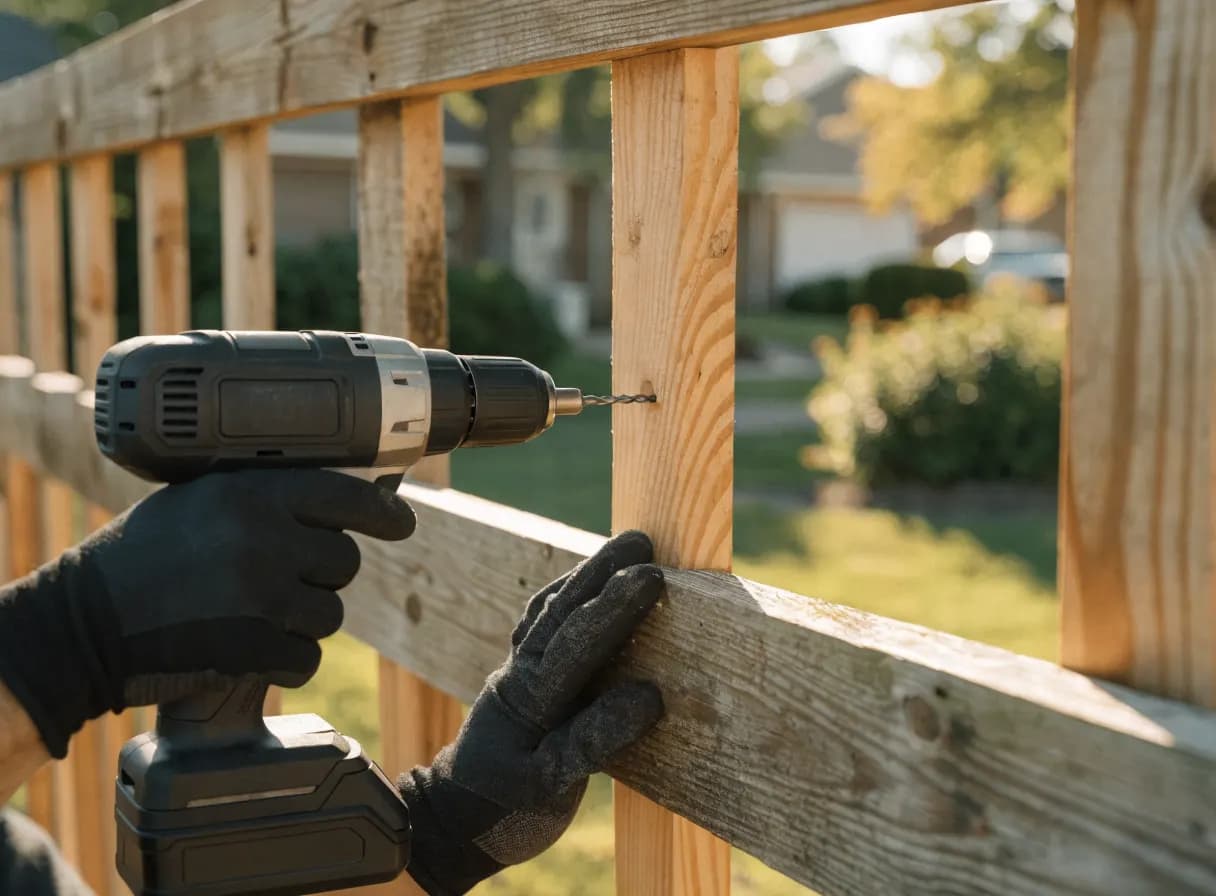
Boards are the cheap part; the pattern of their failure is the information. Individual pickets split, cup, or pop free as cedar dries, and swapping them is fast, $10 to $25 per board installed locally. A run of failing boards along the bottom of the fence points at sprinklers or soil contact. Whole panels sagging usually means the horizontal rails have rotted at their post connections, and rail replacement or steel rail brackets restore the structure without rebuilding the section.
Match new cedar to old knowing it will not match for a year; new wood weathers toward its neighbors, or a stain coat unifies everything immediately. This is bread-and-butter fence, deck and gutter repair work, usually one visit per problem area.
Gates: the moving part that moves wrong
Expand section
Gates: the moving part that moves wrong
Gates sag because physics never stops pulling the latch corner down. The repair ladder, cheapest first: bigger and longer hinge screws into sound wood, upgraded hinges sized for the gate's weight, a diagonal brace running from upper hinge corner to lower latch corner, or an anti-sag cable kit doing the same job in steel. If all of that is right and the gate still drags, look at the hinge post itself, which is often quietly leaning and takes you back to the post section above.
Seasonal rubbing is its own case: wood gates swell in irrigation season and shrink in winter. A gate that only sticks in July needs a light trim and sealed edges, not new hardware.
Stain and seal: the multiplier
Expand section
Stain and seal: the multiplier
Every repair lasts longer under a finish coat. Unsealed cedar grays, checks, and drinks water; a penetrating stain or sealer applied every few years slows all three. The best sequencing is repair first, then wash, then stain the whole run so patched sections blend and the new boards stop aging on their own schedule.
Application is straightforward on a sound fence, and we handle it as part of exterior painting scope alongside the carpentry. If the fence backs onto an HOA street, check the association's stain color rules before choosing a tone.
The repair-versus-replace math
Expand section
The repair-versus-replace math
Repair wins while the damage is local; replacement wins when the structure is failing everywhere at once. The useful audit is a ten-minute walk: push-test every post, count the spongy ones, and scan rails at their post connections. A fence with 2 bad posts out of 20 is a repair job without question. A fence where a third of the posts fail the push test, with rails soft throughout, is spending its remaining life; sectional replacement, often reusing sound pickets, becomes the better money.
Age matters less than condition. A 20-year-old fence that was sealed and kept dry can outlast a 10-year-old fence that grew up behind a sprinkler head. Count failures, not birthdays, and get the arithmetic in writing either way, the same discipline described in what small home repairs cost in Boise.
Prevention: cheap, boring, effective
Expand section
Prevention: cheap, boring, effective
Three habits keep the repair visits rare. Walk the fence each spring and after major windstorms, push-testing posts and noting soft boards before they become leaning sections. Adjust sprinkler heads so the fence line is not on the watering schedule; this single change adds years. And keep soil, bark, and planter beds from piling against the bottom rail, because wood touching damp ground is wood on a countdown.
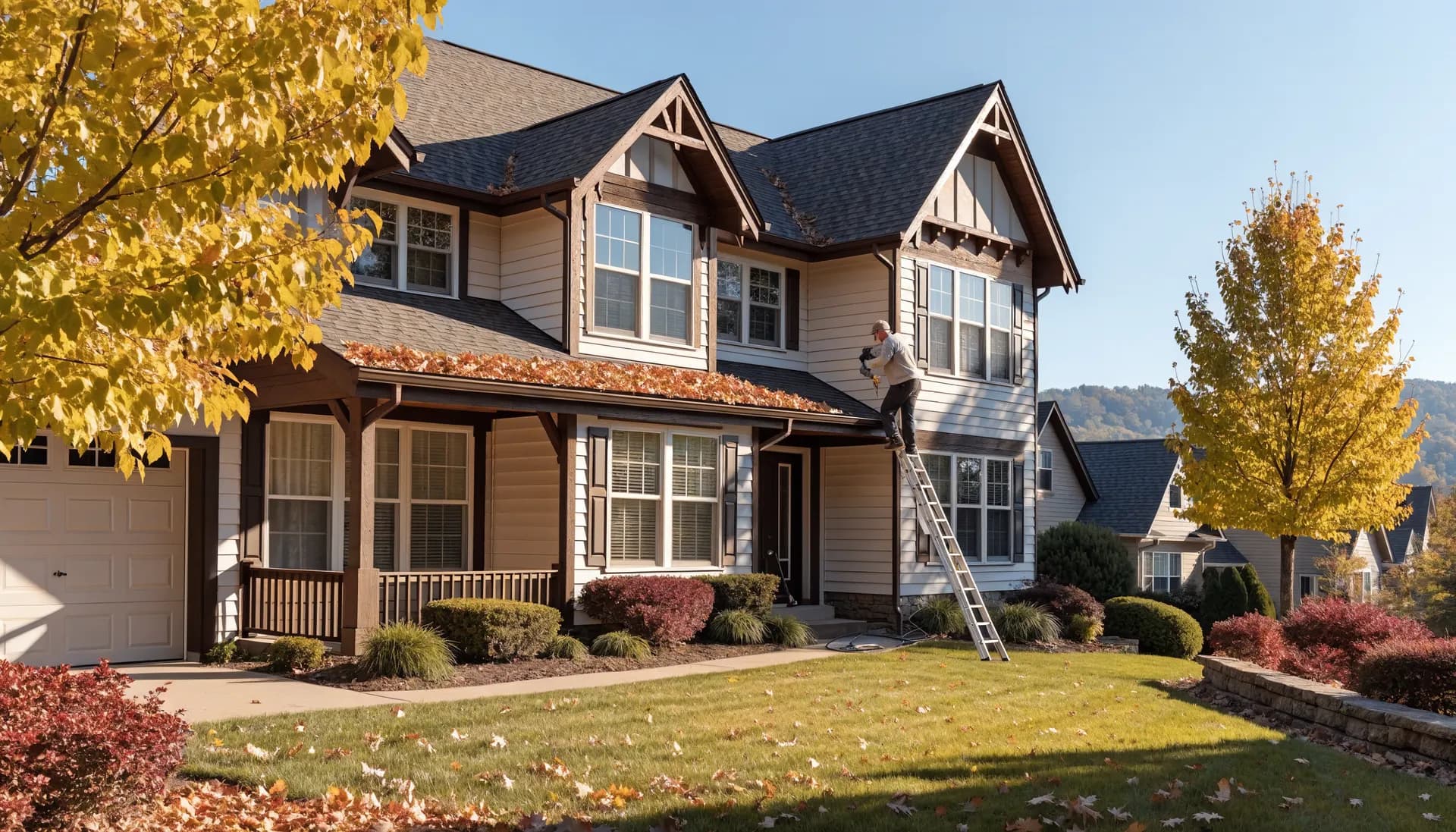
While you are outside with that checklist, the gutters deserve the same seasonal pass, covered in our gutter cleaning schedule for Boise.
Get the fence standing straight
Expand section
Get the fence standing straight
Send photos of the lean, the gate, or the damage, with a rough count of affected sections, and we will quote the repair upfront, and tell you honestly if your fence is at the point where sectional replacement beats patching. Start at the contact page or see the full scope of fence, deck and gutter repair.