What Boise winter actually does to houses
Expand section
What Boise winter actually does to houses
Treasure Valley winters damage homes through repetition, not severity. We rarely get brutal cold, but we get dozens of freeze-thaw cycles, and each one works on the same weak points: water left in hose bibs and exposed pipes, water pooled in clogged gutters, and water sitting in cracked caulk joints, expanding as ice and widening its own opening for next time. Add heating season, when every unsealed gap and dragging door leaks paid-for heat, and the case for a fall checklist is simply economics.
The good news is the list is short, cheap, and almost entirely handyman-scale. Here it is in priority order.
Priority one: outside water
Expand section
Priority one: outside water
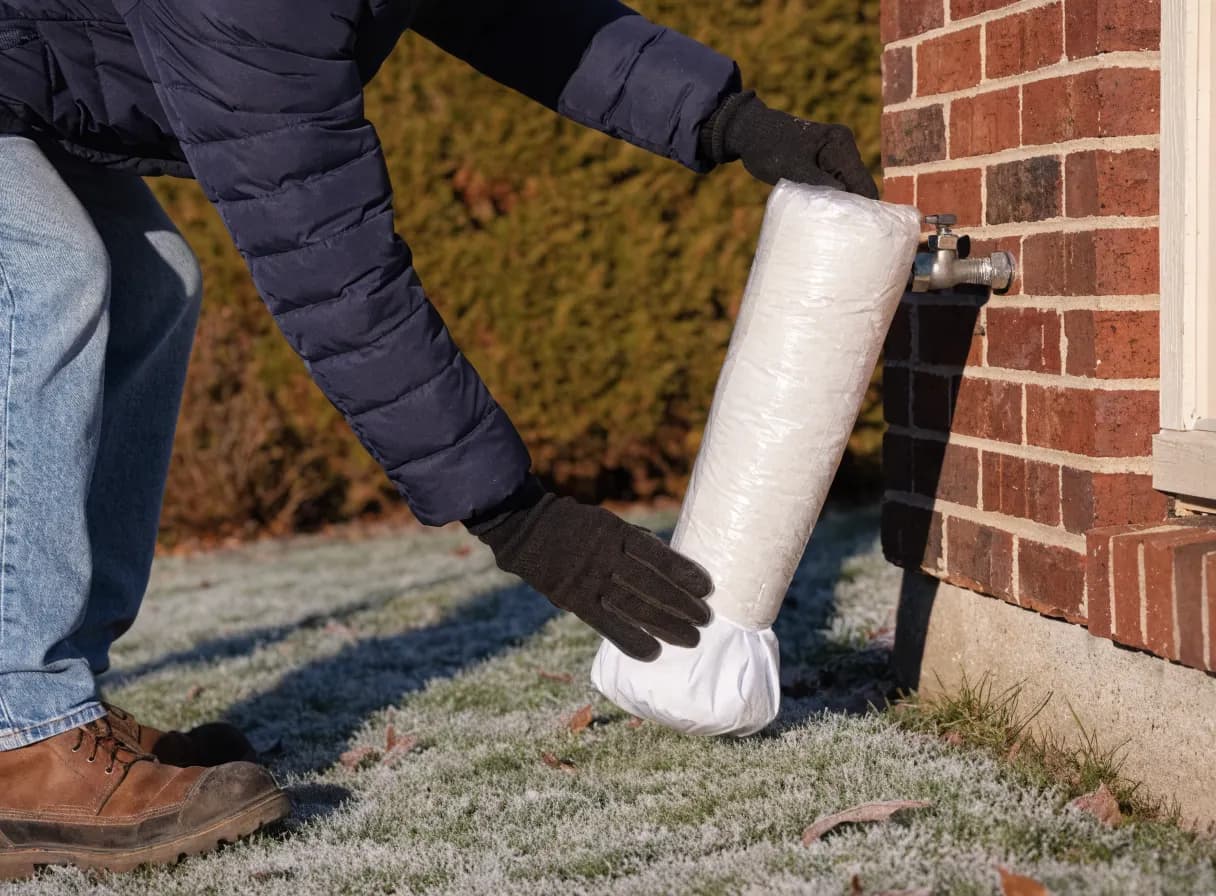
The most expensive preventable winter failure is a burst pipe, and the most common cause is a garden hose left connected. A connected hose traps water in the bib, freezes, and splits the pipe inside your wall, often unnoticed until spring. Before the first frost warning: disconnect and drain every hose, shut interior bib valves where they exist, and fit insulated covers on the bibs. Irrigation systems get blown out by a sprinkler service; that is their trade, not ours, but book it early because everyone calls the same week.
Then walk the vulnerable pipe runs: garages, crawl spaces, and sinks on exterior walls. Foam sleeves on exposed runs cost almost nothing to add and fall within minor plumbing work. Finally, find your main shutoff and make sure it turns. The difference between a burst pipe and a disaster is how fast the water stops.
Priority two: gutters after leaf drop
Expand section
Priority two: gutters after leaf drop
A clogged gutter in November is an ice dam in January. Full gutters hold water; frozen water lifts and separates gutter runs and backs snowmelt up under the shingle edge, where it finds ceilings. The fix is timing: clean after most leaves are down, typically late October here, and check three things while up there: downspouts actually discharging away from the foundation, hangers holding the runs snug against the fascia, and seams not dripping. Cleaning and those minor repairs are core gutter service work. While the ladder is out, it is the natural moment for a quick roof-edge and flashing look, and for putting the deck to bed for winter, which our deck maintenance guide covers.
Priority three: the sealing pass
Expand section
Priority three: the sealing pass
Boise's freeze-thaw climate eats exterior caulk on a roughly annual schedule. Walk the outside of the house and look at the joints: siding-to-trim, window and door perimeters, and every penetration, hose bibs, dryer vents, cable entries, gas lines. Cracked or pulling caulk gets cut out and redone with exterior-grade sealant, because each open joint is a two-way problem, heat leaking out and water working in, with ice finishing the job. A whole-house sealing pass is the heart of our caulking and maintenance service and typically takes a couple of hours.
Inside, the same logic applies to moving parts: weatherstripping on exterior doors compresses and tears with use, and a door you can see daylight around is a door you are heating the porch through. Fresh weatherstrip and a proper door sweep are trivial parts with outsized payback.
Priority four: doors, windows, and the drag test
Expand section
Priority four: doors, windows, and the drag test
A door that drags in October seals badly all winter. Wood swells with fall moisture, hinges sag with use, and the latch stops meeting the strike plate, so the door either will not seal or will not lock without a shoulder. Adjusting hinges, planing edges, and realigning strikes is quick carpentry, covered in detail in our sticking doors post. Give windows the same two minutes each: confirm they close fully, lock (which pulls sashes tight and seals better), and have intact locks and latches. Storm doors get their closers checked before the wind does it for you.

Priority five: the indoor safety-and-airflow list
Expand section
Priority five: the indoor safety-and-airflow list
Heating season is when detector batteries and blocked airflow matter most. Test smoke and carbon monoxide detectors and replace batteries; CO risk peaks when furnaces and gas fireplaces run daily. Replace the furnace filter and confirm registers are not buried under furniture. Reverse ceiling fans to push warm air down. Clean the dryer vent run, a lint-packed duct working overtime through winter is a fire item, not a chore. Furnace servicing itself belongs to an HVAC company; everything around it is fair game for a handyman visit.
The one-visit version
Expand section
The one-visit version
Almost everything above fits a single two-to-three hour visit in October. Our fall bookings usually run: hose bibs and visible pipe runs, gutter cleaning with minor repairs, the exterior caulk pass, weatherstripping and door adjustments, detectors, and a punch list of whatever small items surfaced since spring. At market rates a bundled visit commonly lands between $250 and $600 depending on house size, which is cheaper than any single one of the failures it prevents. For how this fits an annual plan, see budgeting for home maintenance in Idaho.
Book the fall visit before the fall rush
Expand section
Book the fall visit before the fall rush
The winterization window is short and everyone remembers it the same week. Book in early October and the whole list is done calmly before the first freeze warning; call in late November and you are scheduling repairs instead. Send us your address and anything you already know needs attention, and we will handle the rest of the checklist in one trip. We winterize homes across Boise, Meridian, Eagle, Nampa, Kuna, Star, Middleton, Garden City, and Caldwell. Get on the fall schedule.