What Boise weather does to a deck
Expand section
What Boise weather does to a deck
The Treasure Valley is deceptively hard on decks: our sun does more damage than our winters, and the combination outworks both. High-desert UV at altitude breaks down stains and sealers fast, especially on south and west exposures, leaving bare wood to gray and crack. Then winter runs dozens of freeze-thaw cycles that push moisture into every unsealed crack and pry it wider, working fasteners loose a little each year. Snow itself is mild here; the cycling is the abrasive.
The result is a maintenance climate where the finish, not the wood, is the thing constantly wearing out, and where keeping that finish alive is most of the game. A deck that gets the annual rhythm below routinely lasts decades. One that goes five years untouched starts converting cheap surface upkeep into expensive structural repair.
The fifteen-minute spring inspection
Expand section
The fifteen-minute spring inspection
Every deck year starts with a slow walk in April or May, and it covers six things. Press shaded corners and board ends near the house, feeling for softness, wood that gives is wood taking on water. Sight down the boards for cupping, deep checks, and splinter fields. Note every popped nail and proud screw; each is a trip hazard now and a water entry later. Grab each railing post and try to wiggle it; a rail that moves is a rail that fails when someone actually leans. Bounce gently on each stair tread and check the stringers. Finally, look at the ledger zone where deck meets house: intact flashing above it, no staining or softness below it.
Most years the list this produces is small and cheap: a dozen fasteners, one board, a railing bolt. That is the system working. The inspection exists to keep the list that size.
Washing and sealing: the finish is the maintenance
Expand section
Washing and sealing: the finish is the maintenance
Sealer is sacrificial by design; you renew it so the wood never takes the hit. The test takes ten seconds: sprinkle water on a board, and if it beads, the finish is alive; if it soaks in, the wood is drinking every storm. In this climate, horizontal surfaces typically need re-coating every one to three years, sun-blasted decks at the short end, shaded and covered ones longer, while verticals and railings stretch further.
The sequence matters more than the product. Clean first, deck-wash solution and a stiff brush, or a pressure washer used gently with a wide fan, never up close where it tears fibers. Let the boards dry fully, two or three of our reliably dry summer days. Then coat, on a moderate-temperature stretch, working the sealer or stain into open grain. Boise's long dry season makes the scheduling easy; the failure mode is not weather, it is skipping the drying step or sealing over gray, dead fibers the new coat cannot bond to. Washing and sealing sit inside our deck service, and full repaints of railings and skirting fall under exterior painting.
Fix-now items: boards, rails, and stairs
Expand section
Fix-now items: boards, rails, and stairs
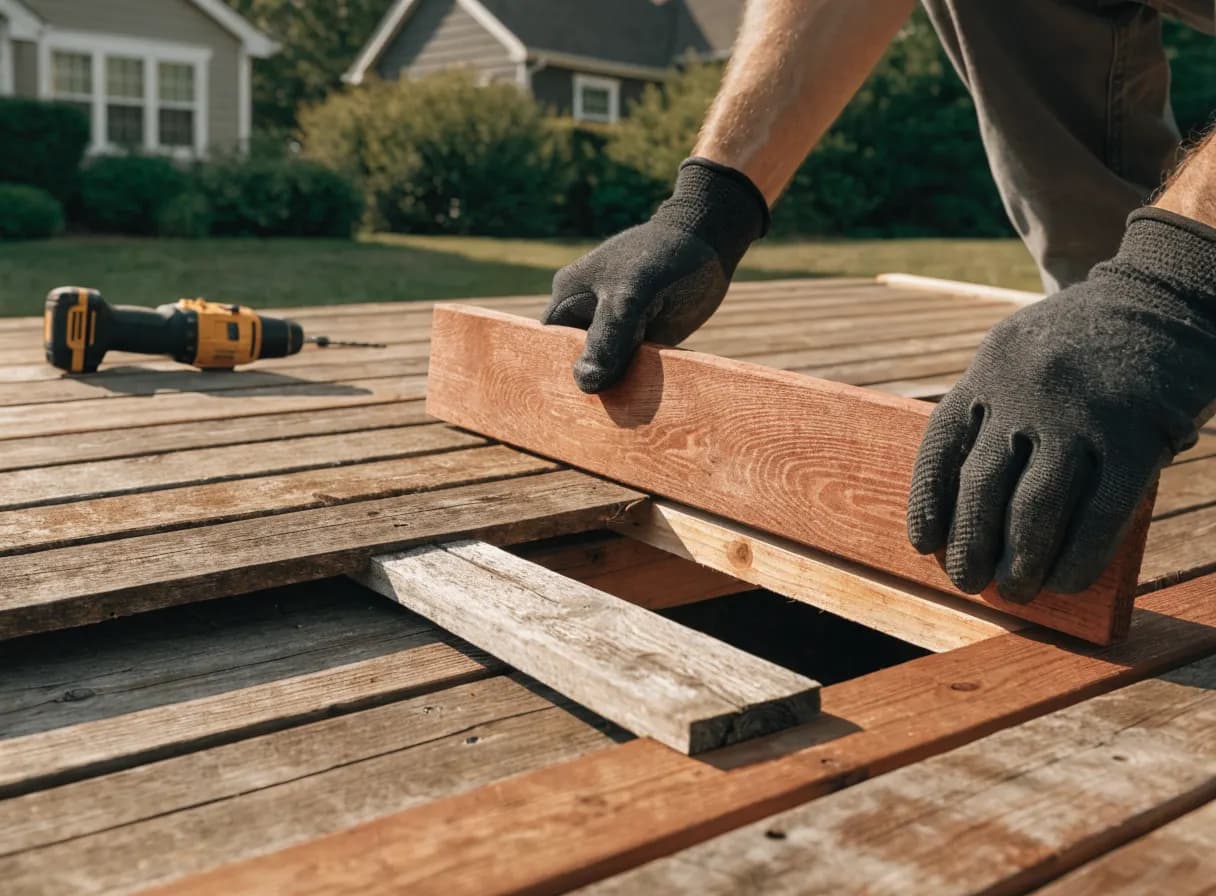
Three findings from the inspection should never wait for a convenient season. Soft or cracked boards get replaced promptly, because a compromised board is both an ankle risk and a water channel to the framing below; matching and weathering-in a few new boards is routine. Wobbly railings get re-anchored now, railings are fall protection, and the moment they are needed is precisely when a loose one lets go. Stairs, the highest-load, highest-consequence part of the deck, get loose treads refastened and cracked stringers addressed immediately.
All of this is board-level carpentry, squarely handyman scope, and typically $100 to $400 per item at valley market rates. Batched into one visit with the wash or the fastener sweep, the per-item math improves the usual way.
Knowing when it is bigger than maintenance
Expand section
Knowing when it is bigger than maintenance
The line between deck repair and deck rebuilding runs through the frame. Rot in joists or beams, posts moving at their bases, footing heave from frost, noticeable sway underfoot, or any concern at the ledger connection, the bolted joint holding the deck to the house, and the failure point in most real deck collapses: these are structural findings. They call for a contractor, and possibly a permit, not a handyman with a board. Our part is the honest referral: when an inspection turns up frame-level trouble, we say so plainly, because a fresh coat of stain on a failing frame is the worst money a deck owner can spend.
The encouraging truth: decks that get the annual rhythm almost never reach that conversation. Structural failures are overwhelmingly deferred-maintenance stories, years of water finding unsealed wood and unchecked connections.
The Boise deck calendar
Expand section
The Boise deck calendar
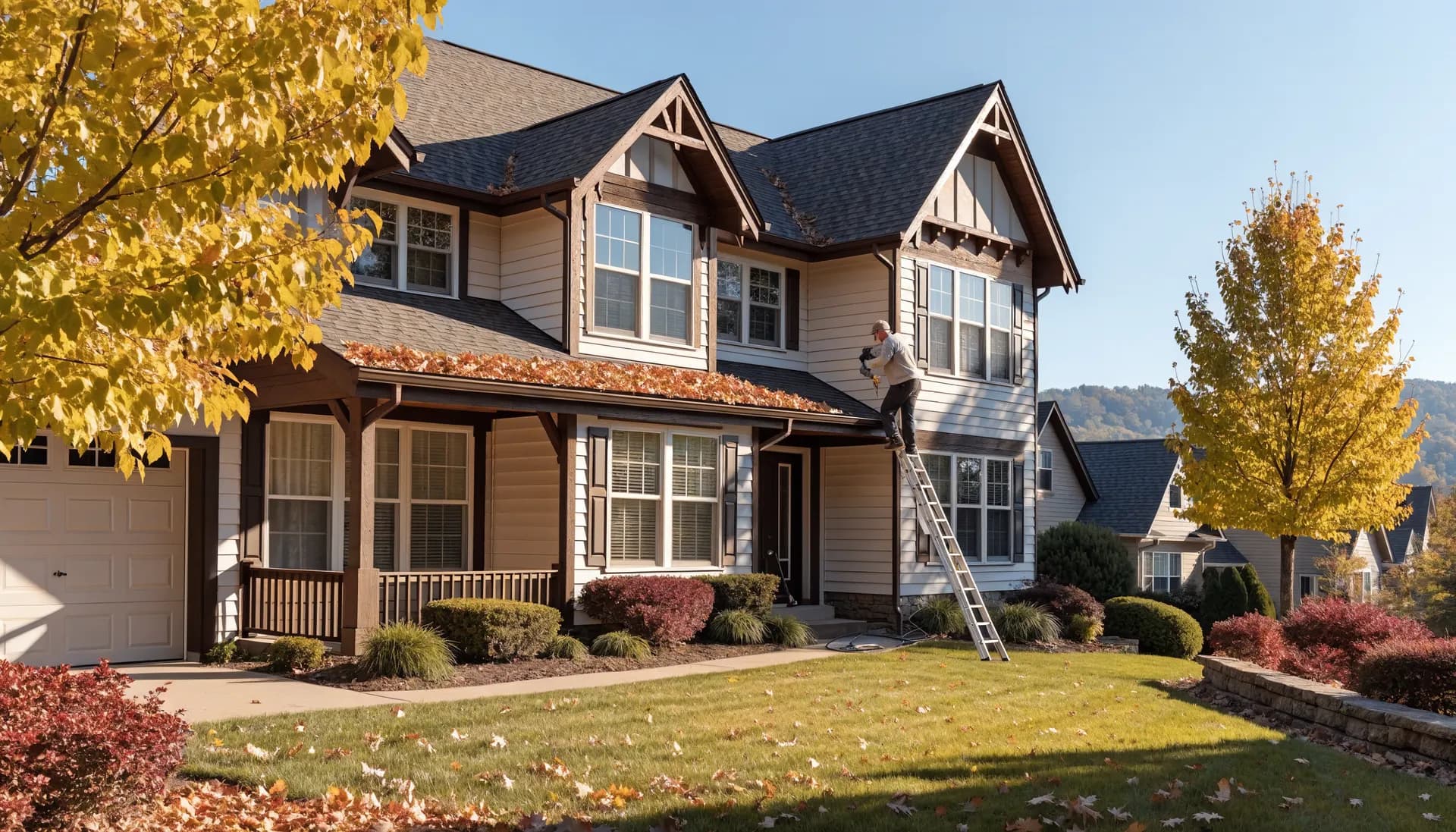
Spring: inspect and repair. The walk-through, the fastener sweep, board and railing fixes, and the water-bead test. Summer: seal if the test says so. Wash, dry fully, coat during a moderate stretch. Fall: clear the surface. Leaves, planters, and debris trap moisture against boards all winter, so bare boards and clean gaps matter more than any product; it pairs naturally with the fall winterization visit. Winter: shovel with plastic, along the boards, when heavy snow does come. That is the whole rhythm, and within a home maintenance budget it is a small, predictable line that protects one of the most expensive assemblies on the house.
Put your deck on the rhythm
Expand section
Put your deck on the rhythm
If your deck has not had a real inspection in a couple of years, start there. We do deck checks, fastener sweeps, board and railing repairs, washing, and sealing across the Treasure Valley, flat-quoted upfront, and we will tell you honestly if what we find belongs to a contractor instead. Send a few photos of the deck, note anything that moves or feels soft, and we will take it from there. Book a deck check before the sealing window closes.