The most important $8 in your house
Expand section
The most important $8 in your house
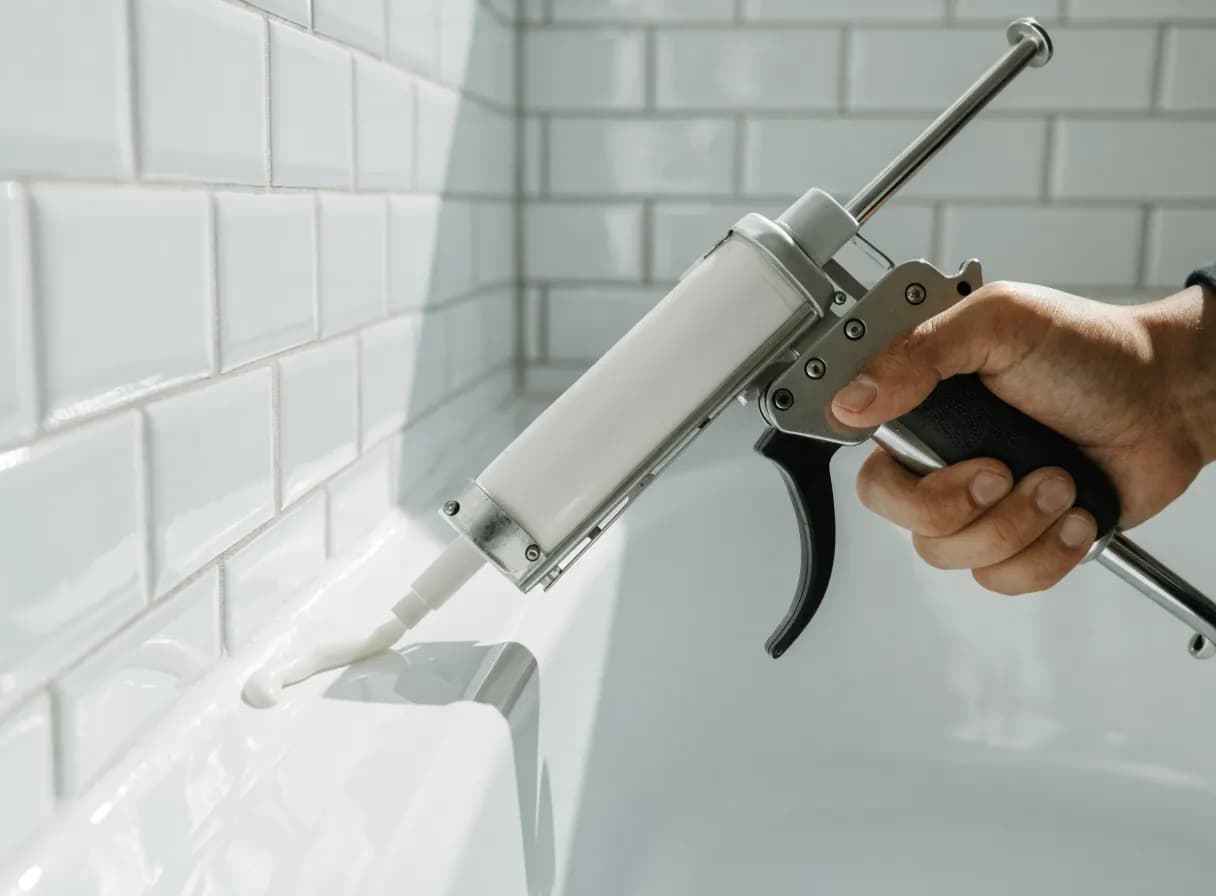
Caulk is the flexible seal at every joint where two materials meet, and it is the only thing standing between routine moisture and expensive rot at dozens of points in your home. Around the tub, along the counters, at every window and door, at each pipe and vent through the siding: the materials on either side expand, contract, and move at different rates, and the bead between them absorbs that movement while keeping water out. When the bead cracks, lifts, or hardens, water starts finding the gap, quietly, at every shower and every storm.
Boise makes this a livelier subject than it sounds. Our freeze-thaw winters and high-UV summers are close to a worst-case aging test for sealant, which is why caulk maintenance in this valley is an annual rhythm, not a once-a-decade chore. This guide maps what to seal, with what, and how often.
Three products cover the whole house
Expand section
Three products cover the whole house
Nearly every job calls for one of three sealants, and using the wrong one is why beads fail early. Pure silicone owns the wet zones: tubs, showers, sinks, backsplashes. It stays flexible and fully waterproof for years, and its one drawback, paint will not stick to it, does not matter on tile and porcelain. Acrylic-latex "painter's caulk" owns interior trim: baseboard tops, casing joints, drywall corner cracks, anywhere the bead will be painted. It tools easily and takes paint, but it has no business in a shower. Exterior joints get polyurethane or a modern hybrid sealant, which combine strong adhesion, real flexibility, and UV tolerance, the three things Boise weather attacks.
The label matters more than the brand. "Kitchen and bath" means siliconized or silicone; "painter's" means interior acrylic; "window, door, and siding" grade means exterior. Bathroom silicone with a mildewcide additive is worth the dollar upgrade.
Wet zones: the highest-stakes beads in the house
Expand section
Wet zones: the highest-stakes beads in the house
The joint where tub meets tile, and tub meets floor, protects the framing under your bathroom, and it fails on a three-to-five year cycle. Watch for the early signals: mildew darkening inside the bead that scrubbing cannot reach, edges lifting from the tile, hairline cracks along the bead, or a gap opening where the tub flexes. Any of those means water is getting behind, a little at every shower, into subfloor and joists where it does its work invisibly. The soft spot on the bathroom floor and the stain on the ceiling below are late-stage symptoms of an $8 bead that failed two years earlier.
The fix is a strip-and-replace, and the prep is the job. Old caulk cut and pulled completely, residue scraped, the joint cleaned of soap film and mildew, then dried thoroughly, a genuinely dry joint, not a wiped one, before a fresh silicone bead goes down and gets tooled smooth in one pass. Caulking over old caulk bonds to the failure and peels within months, which is why the shortcut version has to be redone so often. This is core work in our caulking and maintenance service, and honestly one of the jobs where the pro margin over DIY is mostly patience with prep, as our DIY vs handyman post concedes.
Interior beads: cosmetic, but they carry the finish
Expand section
Interior beads: cosmetic, but they carry the finish
Inside the house, caulk is doing appearance work: closing the shadow lines where trim meets wall. Baseboard tops, door and window casings, crown joints, and settling cracks at drywall corners all get paintable acrylic-latex, tooled tight, then painted. It is what makes trim look installed rather than leaned. This work rides along naturally with painting and trim repair, and the material cost is trivial; the finish difference is not. Kitchen counter and backsplash joints sit halfway between cosmetic and protective, water and crumbs both, and get the wet-zone treatment on a longer cycle.
Exterior: the Boise-specific battleground
Expand section
Exterior: the Boise-specific battleground
Outside is where this climate earns the annual inspection. The joints that matter: window and door perimeters, where failed beads route rain into the wall cavity; siding-to-trim joints and butt joints; and every penetration, hose bibs, dryer and furnace vents, cable and gas entries, exterior outlets. Each open crack is a two-way leak, heated air out all winter, water in ahead of every freeze, and each freeze widens the crack for the next one. That compounding is why a fall walk-around with a caulk gun is standard Boise homeownership, and why it anchors our winterization checklist.
Technique notes that matter outside: exterior-grade sealant only, applied in moderate temperatures on dry surfaces, with old failed material cut out first. Deep gaps get foam backer rod before sealant, a detail DIY passes usually skip and the reason wide joints crack again by spring.
The Boise caulk calendar
Expand section
The Boise caulk calendar
Two looks a year cover everything. Fall, before the first freeze: walk the exterior, every window, door, and penetration, and redo anything cracked or pulling. Any time indoors, yearly: check wet-zone beads for darkening, lifting, or gaps, and re-caulk on the three-to-five year cycle or at first failure, whichever comes first. Interior cosmetic beads go on no schedule at all; fix them when they crack or when painting anyway. As a line in the annual maintenance budget, sealing is nearly a rounding error, and it protects against the single most expensive category of home damage there is: slow water.
Run the bead yourself, or book the pass
Expand section
Run the bead yourself, or book the pass
Caulking is honest DIY territory with two exceptions: prep discipline and ladder height. If you will fully strip the old bead, truly dry the joint, and tool one continuous pass, the material is forgiving and the tools cost $15. The failure mode is the shortcut version, over-old-caulk, damp joint, which is why so much DIY caulk is redone within the year. A professional pass makes sense when the list spans the whole house: at market rates a full tub re-caulk runs $100 to $250 and a whole-house exterior pass $150 to $400, with our service starting at $145, numbers that sit in context in what small repairs cost in Boise.
Get every joint sealed in one visit
Expand section
Get every joint sealed in one visit
The efficient version is one sealing visit: every wet zone checked, every exterior joint walked, every failed bead stripped and redone with the right product. It pairs naturally with gutter and weatherstripping work in the fall, and it is quiet, unglamorous work that prevents loud, expensive problems. We run sealing passes across Boise, Meridian, Eagle, Nampa, and the rest of the Treasure Valley, flat-quoted upfront. Book a sealing visit before the next freeze does the inspecting for you.